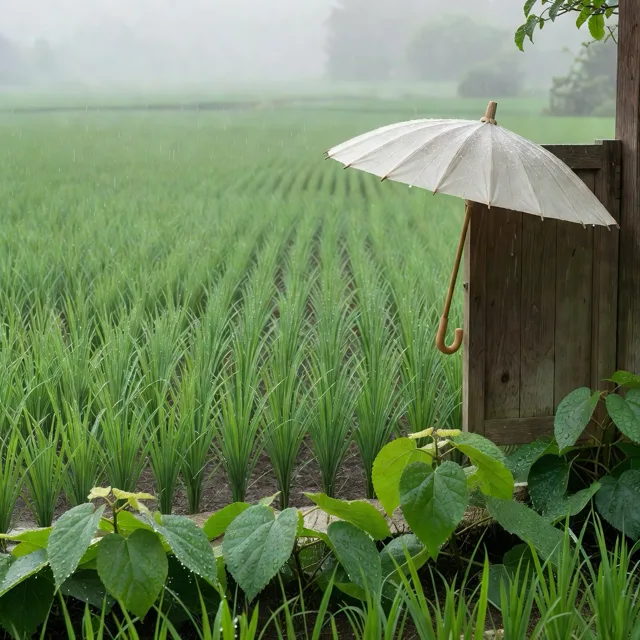
谷雨 (Gǔyǔ) — Grain Rain — arrives on Tuesday, April 20, 2027, at 15:13 Beijing time (early morning of April 20 in the US). It is the sixth of the 24 solar terms and the last term of spring. After this, the next solar term is 立夏 (Lìxià, Start of Summer) on May 6, and the season shifts from Wood to Fire, from Liver to Heart.
谷雨 literally means "grain rain" — the rains that nourish the newly planted grain. From this point through early May, rainfall typically intensifies across much of the Northern Hemisphere. In ancient agricultural China, 谷雨 was the signal that the spring planting season was in full swing and that the earth was drinking deeply. For you, it means two things: the moisture around you is about to peak, and your body needs to start preparing for the heat of summer.
If 清明 was about clarity and remembrance, 谷雨 is about nourishment and transition. The Liver's spring surge is winding down. The 脾 (pí) — Spleen system — is stepping forward to manage the dampness that rain brings. Everything you do during these 16 days should support that handoff.
Table of Contents
The Three Pentads of 谷雨
Each solar term is traditionally divided into three 候 (hòu) — five-day periods called pentads — that describe what the natural world does during each stretch.
| Pentad | Dates (2027) | Traditional Observation | Meaning |
|---|---|---|---|
| 一候 | Apr 20-24 | 萍始生 — Duckweed begins to grow | Still water surfaces turn green with new duckweed. The combination of warmth and rain creates perfect conditions for water plants. In the natural calendar, this signals that water is warm enough for sustained growth. |
| 二候 | Apr 25-29 | 鸣鸠拂其羽 — Cuckoos call and preen | The cuckoo (布谷鸟, bùgǔ niǎo, literally "sow-grain bird") begins calling. Its song was traditionally heard as a reminder to farmers: plant the grain now. The bird preens its feathers in the rain, preparing for the busy season ahead. |
| 三候 | Apr 30-May 5 | 戴胜降于桑 — Hoopoes land on the mulberry | The hoopoe, a crested bird, appears in the mulberry groves. In traditional silk culture, this meant the silkworms were ready for mulberry leaves. It is nature's signal that late spring is reaching its fullness before summer takes over. |
These observations are not scientific claims — they are poetic markers that have guided the Chinese agricultural calendar for millennia. They remind us to pay attention to what nature is doing around us, which is half the point of following the solar terms in the first place.
The Tea Tradition: 谷雨茶
谷雨 has a deep connection with tea. 谷雨茶 — tea picked on the day of Grain Rain — is traditionally considered to have special clarity and brightness. While 明前茶 (pre-Qingming) and 雨前茶 (pre-Grain Rain) get most of the commercial attention, the custom of drinking the first cup of the new season's tea on 谷雨 itself persists in tea-growing regions.
The tradition also connects 谷雨 with the legend of Cangjie — the mythical creator of Chinese characters. The United Nations marks April 20 as Chinese Language Day, choosing the 谷雨 date in honor of this connection. According to one version of the legend, when Cangjie completed his characters, the heavens rained grain in celebration — hence the name.
For your daily practice: if you have a fresh packet of spring green tea, make a mindful cup on the morning of April 20. Sit with it. Acknowledge the last days of spring. Drink it warm, not iced — your Spleen will thank you.
Peony Season: 谷雨 Flowers
谷雨 is also known as the season of the peony (牡丹, mǔdān). The classical phrase 谷雨三朝看牡丹 — "three mornings after Grain Rain, view the peonies" — describes the traditional custom of visiting peony gardens in full bloom.
In feng shui, peonies symbolize prosperity, romance, and honor. Fresh peonies in the living room or bedroom during this season carry strong Wood-to-Fire transitional energy — the lush bloom of Wood reaching its peak before yielding to summer's Fire. If you have a garden, late April is typically peak peony bloom time in much of the US.
Indoors, a vase of peonies in the South sector (this year's Star 4 sector) supports recognition and creative energy. In the Southwest, place them gently — the sector hosts both the auspicious Star 6 and the Tai Sui, so do not rearrange furniture dramatically, but a fresh flower arrangement is fine.
Diet: Drain Damp, Support Spleen
The dietary theme of 谷雨 can be summed up in four characters: 健脾祛湿 (jiàn pí qū shī) — strengthen the Spleen, expel dampness. Our spring dampness guide covers the full food list and a 7-day plan. Here is the specific 谷雨 approach:
Eat more
- Aromatic vegetables: Cilantro, perilla (紫苏), basil, scallion, garlic — aromatic flavors transform dampness (化湿).
- Light grains: Millet, Job's tears, rice congee. Gentle on the Spleen, easy to digest.
- Spring greens: Watercress, chrysanthemum greens, pea shoots — still available in late spring, lightly cooling without being cold.
- Light proteins: Steamed fish, tofu, shrimp. The season calls for lightness, not heaviness.
Eat less
- Rich, fried, greasy food: These burden the Spleen and generate internal dampness.
- Iced drinks and raw cold food: Late spring is warmer but the Spleen still needs warmth. Cold food stalls its transport function.
- Excessive sour: Sour constricts the Liver, and the Liver should be releasing now, not tightening. A little vinegar or citrus is fine; do not overdo it.
Home Feng Shui: Dehumidify & Move Air
Rain means moisture in your home. And moisture that sits becomes stagnant qi. Here is the 谷雨 home checklist:
Dehumidify the North
The North sector hosts Star 5 in 2027 — the most challenging annual star. Dampness in the North amplifies its negative influence. Run a dehumidifier, keep the area clean, and ensure good air circulation. If your bathroom is in the North, ventilate it thoroughly after every shower.
Keep windows moving air
Open windows on dry mornings (before 10am is ideal) to flush stale qi. Close them when rain starts. The goal is circulation, not humidity injection. A cross-breeze through the house for even 20 minutes refreshes the entire space.
Bathroom attention
Bathrooms accumulate the most moisture. Fan on during and after showering. Squeegee shower walls. Keep drains clear. In feng shui, a damp bathroom is a wealth drain — doubly so during 谷雨 when external moisture is at its seasonal peak.
No digging in the Southwest
The Tai Sui reminder applies through the entire year: no major ground disturbance in the Southwest sector of your property. Light gardening and watering remain fine. See our 2027 yard work guide for the complete breakdown.
Body Protocol: Spleen Care Begins
The transition from Liver season to Spleen season is happening now. While the Liver does not fully step back until 立夏, the Spleen is already picking up responsibility for managing the increasing moisture. Here is the body protocol for 谷雨:
Morning
- Wake with the sun (around 6-6:30am in most US time zones).
- Warm water with a thin slice of ginger before breakfast.
- Warm breakfast: congee, oatmeal, or eggs. No cold smoothies.
- A 15-20 minute walk outdoors. Morning sun supports yang qi.
Afternoon
- Green tea (雨前茶 is ideal). One cup after lunch.
- A brief stretch or walk. Avoid sitting for more than 90 minutes at a time.
- If you feel heavy-headed, press 足三里 (Zúsānlǐ, ST-36) — three finger-widths below the outer knee — for one minute each side. This is classically one of the most important acupoints for Spleen support.
Evening
- Dinner by 7pm. Keep it light. Soups and steamed dishes.
- Keep one warm layer nearby — late-spring evenings can still drop surprisingly cold.
- Bed by 11pm. Consistent sleep protects the Spleen.
16-Day Plan: 谷雨 to 立夏
| Period | Dates | Focus | Action |
|---|---|---|---|
| 一候 | Apr 20-24 | Drain damp, tea ritual | Begin the damp-draining diet. Drink 谷雨茶 on the 20th. Dehumidify the North bathroom. Check gutters before the rain picks up. |
| Earth Day | Apr 22 | Water conservation | Fix dripping taps. Check rain barrels. Review your household water use. |
| 二候 | Apr 25-29 | Lighten meals, move more | Shift to lighter proteins (fish, tofu). Walk daily. Air bedding on sunny days. Reduce dairy if dampness signs persist. |
| Arbor Day | Apr 30 | Plant in growth sectors | If planting a tree, choose the SE or S sector. Avoid the SW and W. |
| 三候 | Apr 30-May 5 | Prepare for Fire season | Begin incorporating Heart-supporting foods (lotus seed, red dates, mung bean). Swap the last warm winter bedding for lighter layers. Mentally release spring. |
| 立夏 | May 6 | Summer begins | The season shifts to Fire. Heart care takes center stage. See our 立夏 guide for the full transition protocol. |
谷雨 is a quiet term — no dramatic festival, no big celebration. Its gift is the rain that makes everything grow. Your job is simply to help your body manage that moisture so you arrive at summer's door feeling light, clear, and ready for heat.
Seasonal Shifts, Personalized
Your BaZi chart reveals how your body handles the Wood-to-Fire transition and where dampness tends to accumulate. A consultation gives you a seasonal strategy built for your constitution.
Book Your Seasonal Consultation