You slept eight hours, but waking up feels like pulling yourself out of mud. Your head is foggy until the second cup of coffee. Your limbs feel heavier than usual. Your mouth has a sticky, slightly sweet coating first thing in the morning. If this describes your April, there is a good chance you are dealing with what TCM calls 湿 (shī) — dampness.
湿 is one of the six climatic influences in TCM, and late spring is when it hits hardest. The rain intensifies as we approach 谷雨 (Gǔyǔ, Grain Rain) on April 20. The weather swings between warm and cool. Many people are still eating the richer foods of earlier spring, and the combination of external moisture and internal heaviness creates a body pattern that classical physicians have described for centuries: heavy limbs, fuzzy thinking, poor appetite, loose stools, and a general sense that your energy is stuck in low gear.
This is not the same as the intense summer dampness that comes with scorching heat — our summer dampness guide covers that. Spring dampness is milder but sneakier, building gradually before you realize what's happening. The good news: a week of simple adjustments can make a real difference.
Table of Contents
What Dampness Looks Like in the Body
Dampness in TCM is not a disease — it is a pattern. It describes a state where the body is holding more moisture than it can process efficiently. Traditionally, practitioners observe the following signs:
| Area | Sign | What It Means in TCM |
|---|---|---|
| Head | Foggy thinking, heavy head, dull headache | Dampness is heavy and sinks, but it also clouds the clear yang that rises to the head. |
| Mouth & tongue | Sticky mouth, sweet or bland taste, thick white tongue coating | The tongue reflects the Spleen. A thick, greasy coating is the classic dampness indicator. |
| Digestion | Bloating, loss of appetite, loose stools | The Spleen's transport function is overwhelmed. Food stagnates instead of transforming into energy. |
| Limbs | Heaviness, swelling, sluggish movement | Dampness pools in the muscles and joints. Classically described as "the body wrapped in a wet cloth." |
| Energy | Fatigue that rest doesn't fix, difficulty waking | Dampness obstructs qi circulation. Energy is present but cannot flow freely. |
You don't need all of these to have a dampness pattern. Two or three together, especially during rainy weather, are enough to point in this direction.
Why Late Spring Is Peak Damp Season
Three factors converge in mid-to-late April:
- External moisture rises. Rain frequency increases before 谷雨 — "grain rain" literally describes the heavier rainfall that nourishes crops. That same moisture enters your home and your body through open windows and skin.
- Dietary carryover. Many people are still eating heavier or greasier foods from the winter and early spring comfort-cooking season. Rich meals generate internal dampness by taxing the Spleen.
- The seasonal transition. As noted in our 雨水 Rain Water guide, dampness begins rising as early as late February. By April, it has had weeks to accumulate if you have not been draining it.
The season logic matters here: Wood still rules until 立夏 (May 6), but 谷雨 opens the transition to late-spring dampness and Earth element/Spleen care. Your body is moving from Liver focus to Spleen focus, and the Spleen is particularly vulnerable to dampness.
The Spleen's Central Role
In TCM, 脾 (pí) — the Spleen system — is the body's chief moisture manager. Its job is to transform food and drink into usable energy (气 and 血) and transport that energy to where it is needed. When the Spleen is strong, fluids move efficiently. When the Spleen is weakened — by cold food, overthinking, irregular meals, or external dampness — fluids pool and stagnate.
The classical teaching: 脾恶湿 — the Spleen detests dampness. It is a two-way problem. A weak Spleen produces internal dampness, and external dampness weakens the Spleen further. Breaking this cycle requires working both sides: reduce the moisture coming in and strengthen the Spleen's processing power.
Foods That Classically Drain Damp
These foods have been used in Chinese food therapy for centuries to support the Spleen and move excess moisture. None of them are exotic — most are available at any grocery store.
| Food | TCM Nature | How It Helps | How to Use |
|---|---|---|---|
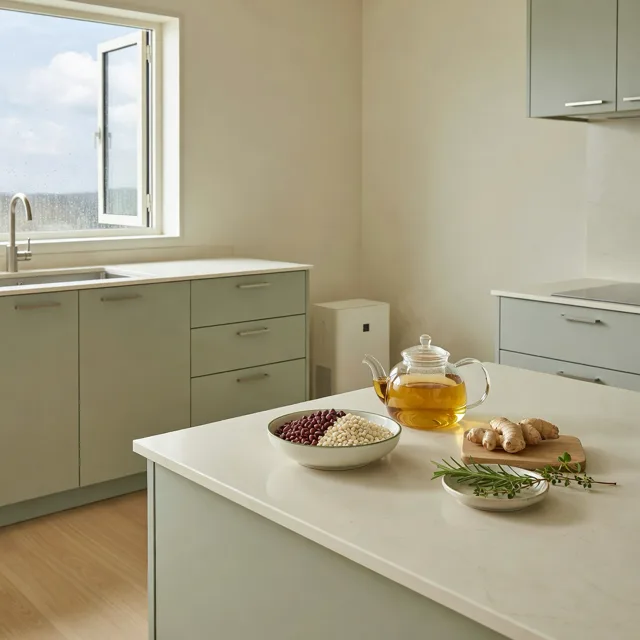
| 薏米 Job's tears (yìmǐ) | Slightly cool, sweet, bland | The single most-used damp-draining grain in TCM. Classically promotes urination and strengthens the Spleen. | Simmer into a drink or add to congee. Pair with red beans for the classic combination. |
| 赤小豆 Adzuki bean | Neutral, sweet, slightly sour | Drains dampness, reduces swelling. A traditional pairing with Job's tears. | Simmer with Job's tears for a daily drink. See our red bean and barley guide for the full recipe. |
| 玉米须 Corn silk | Neutral, sweet | Gently promotes urination and clears damp-heat. The most accessible damp-draining tea ingredient. | Steep dried corn silk in hot water for 10 minutes. Drink as a gentle daily tea. |
| 冬瓜 Winter melon | Cool, sweet, bland | Drains dampness and clears heat. Excellent in soups. | Simmer in a clear broth with a few slices of ginger to balance its cool nature. |
| 大麦 Barley (roasted) | Cool, sweet | Supports digestion, gently clears damp-heat from the Stomach. | Brew roasted barley tea (麦茶) and sip throughout the day. |
| 生姜 Ginger | Warm, pungent | Warms the Spleen and moves stagnant dampness. Essential for cold-damp types. | Add fresh slices to morning congee, soups, and damp-draining drinks. |
| Aromatic herbs (perilla, basil, cilantro) | Warm, fragrant | Aromatic herbs transform dampness through fragrance (化湿). They "wake up" a sluggish Spleen. | Add generously to cooked dishes. Use as garnish on congee and soup. |
5 Habits That Help
1. Move every day
Dampness hates movement. A 20-minute brisk walk, especially in the morning sun, is the single most effective non-dietary intervention. The movement helps the Spleen transport fluids, and sunlight supports yang qi. Sitting all day makes everything worse.
2. Eat warm breakfasts
Cold smoothies, iced coffee, and raw cereal with cold milk are challenging for a damp Spleen. Switch to warm congee, cooked oatmeal with ginger, or a simple egg and toast with hot tea. The warmth supports the Spleen's digestive fire right when it needs it most.
3. Reduce dairy and refined sugar
In TCM, dairy and concentrated sweets are considered damp-producing. During a damp stretch, cutting back on cheese, ice cream, sweetened beverages, and pastries gives the Spleen room to clear the backlog. This is not forever — just for the damp weeks.
4. Dry the home
External and internal dampness feed each other. Run a dehumidifier or air conditioner in damp rooms. Keep bathrooms ventilated. Hang-dry laundry outdoors when possible rather than adding moisture indoors. Air the bedding on sunny days.
5. Sleep before 11pm
The TCM body clock assigns 11pm-1am to the Gallbladder, which supports the Liver's detoxification. Late nights weaken both the Liver and the Spleen, impairing the body's ability to process fluids overnight. Getting to sleep by 11pm gives your system the best chance to clear dampness while you rest.
7-Day Lightening Plan
| Day | Morning | Afternoon | Evening |
|---|---|---|---|
| Day 1 | Congee with ginger and scallion. Green tea. | Light walk, 20 min. Corn silk tea. | Winter melon and tofu soup. Bed by 11pm. |
| Day 2 | Oatmeal with cinnamon and walnuts. Warm water. | Job's tears and red bean drink. Stretch break. | Steamed fish with ginger and cilantro. No screen after 10pm. |
| Day 3 | Congee with yam and dates. Barley tea. | Brisk walk in sunshine. Corn silk tea. | Stir-fried vegetables with aromatic herbs. Early bed. |
| Day 4 | Eggs with wilted greens. Ginger tea. | Job's tears water. Light movement. | Clear soup with radish and mushrooms. Foot soak. |
| Day 5 | Congee with broad beans. Green tea. | Walk or gentle qigong. Barley tea. | Steamed vegetables and fish. Air the bedroom. |
| Day 6 | Warm millet porridge with pumpkin. Ginger tea. | Corn silk tea. Short walk after lunch. | Winter melon soup with shrimp. Bed by 10:30pm. |
| Day 7 | Congee with goji and yam. Barley tea. | Longer walk (30 min). Celebrate the week. | A balanced dinner of your choice. Reflect on how you feel vs Day 1. |
When Dampness Needs More Than Food
The dietary and lifestyle approach works for mild, seasonal dampness. But if your symptoms are severe or persistent — significant swelling, chronic loose stools, joint pain, skin eruptions, or fatigue that has lasted weeks — food therapy alone may not be enough. See a licensed acupuncturist or TCM practitioner who can assess your full pattern and, if appropriate, prescribe herbal formulas targeted at your specific type of dampness (cold-damp vs damp-heat makes a significant difference in treatment).
And if you experience sudden severe swelling, difficulty breathing, chest pain, or any alarming symptom, see a doctor immediately. Dampness is a TCM pattern description, not a medical diagnosis.
⚠️ Disclaimer: The information here reflects traditional Chinese medicine perspectives on dampness and is not a substitute for medical advice. If you experience persistent digestive issues, unexplained swelling, or fatigue, consult a healthcare professional for proper evaluation.
Understand Your Body's Patterns
A BaZi consultation reveals your constitutional tendencies toward dampness, heat, or cold — and the seasonal strategies that work best for your unique makeup.
Book Your Consultation