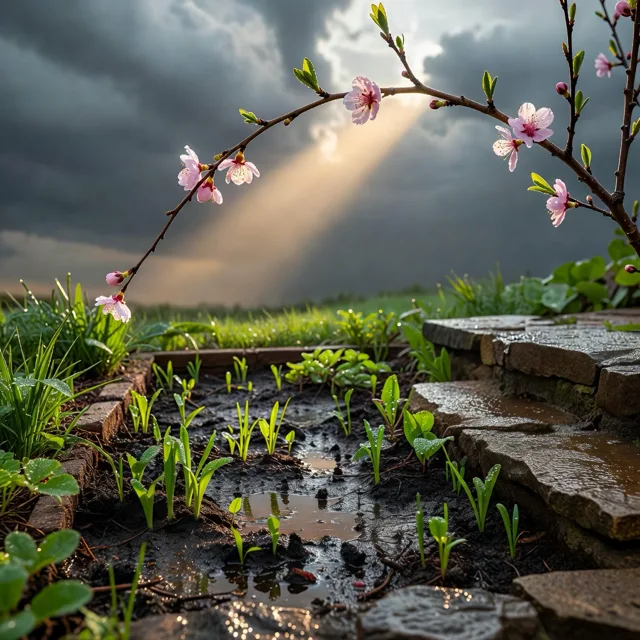
惊蛰 (Jīngzhé) — the Awakening of Insects — arrives on Saturday, March 6, 2027 (03:35 Beijing time; afternoon of Friday, March 5 in the US). It is the third of the 24 solar terms and one of the most dramatic: 惊 (jīng) means "to startle" and 蛰 (zhé) means "to hibernate." Spring thunder — the first rolling boom after winter's silence — startles the creatures from their sleep. The earth wakes up.
This is not a gentle transition. If 立春 whispered that spring was coming and 雨水 brought the first softening rains, 惊蛰 shouts. The Wood element surges to full strength. The 肝 (gān) — Liver system — is now running at peak intensity. Wind picks up, temperatures swing, and the body's rising qi can make you feel both energized and unsettled in the same afternoon.
This guide covers the 15 days from 惊蛰 (March 6) to 春分 (Spring Equinox, March 21) — the most Yang-forward stretch of early spring.
Table of Contents
The Three Pentads of 惊蛰
Each solar term is divided into three 候 (hòu) — five-day periods based on classical ecological observations.
| Pentad | Dates (2027) | Traditional Observation | Meaning |
|---|---|---|---|
| 一候 | Mar 6–10 | 桃始华 — Peach trees begin to blossom | The first blooms of spring. The peach blossom is a symbol of romance and renewal in Chinese culture. Wood energy is now visible on the landscape. |
| 二候 | Mar 11–15 | 仓庚鸣 — Orioles begin to sing | Birdsong returns. The world becomes audible again after winter's hush. The oriole (黄鹂) is classically associated with spring joy. |
| 三候 | Mar 16–20 | 鹰化为鸠 — Hawks transform into doves | The predatory hawks retreat from sight and the gentler doves appear. Classical interpretation: the fierce energy of late winter gives way to the softer, nurturing energy of mid-spring. |
The pentads paint a single arc: from blossom to birdsong to gentleness. The fierce qi of winter fades; the nourishing qi of spring fills its place. Your body and home should follow the same curve — from awakening to settling into the season's rhythm.
Thunder, Insects & the 打小人 Custom
The word 惊 in 惊蛰 literally means "to startle." The classical image is vivid: the first spring thunder cracks the frozen ground and wakes the 蛰虫 (zhé chóng) — the hibernating creatures. Snakes, frogs, insects, and worms stir from their winter sleep and return to the surface.
For your home, this has a practical implication: pests wake too. Ants, spiders, silverfish, and pantry moths that were dormant all winter begin to move. This is the ideal week to:
- Check window screens and door seals for gaps
- Inspect the pantry for signs of insect activity — especially rice, flour, and dried goods
- Transfer open grain bags into sealed containers
- Clear any standing water in plant saucers or drain trays
The 打小人 custom
In southern China, especially Hong Kong and Guangdong, 惊蛰 is the traditional day for 打小人 (dǎ xiǎo rén) — "beating the petty person." This is a folk ritual performed at street-side stations: a practitioner writes the name of a troublesome person on a paper figure and beats it with a shoe while chanting. The thunder of 惊蛰 is believed to amplify the driving-away of negativity.
Whether or not you participate literally, the spirit of the custom is worth noting: 惊蛰 is a day to confront small annoyances, clear grudges, and shake off the petty resentments that accumulated over winter. A walk, a good laugh, or simply deciding to let something go — that is your modern 打小人.
惊蛰 Diet: Pears, Greens & Less Sour
The Liver is at peak strength during 惊蛰. The classical spring diet rule — 省酸增甘 (shěng suān zēng gān), ease off sour and add mildly sweet, neutral foods — is now fully in effect. The Spleen needs support so it is not overwhelmed by the surging Liver.
| Category | Best Choices | Why |
|---|---|---|
| 🍐 Pears | Steamed pear with rock sugar and ginger, pear-chrysanthemum drink | The traditional 惊蛰 pear custom — moistens the Lung, clears heat, soothes dry-wind throat. |
| 🥬 Spring greens | Spinach, bok choy, watercress, pea shoots | Green is the Liver's color. Spring greens gently soothe Liver qi without overheating it. |
| 🥕 Sweet-neutral roots | Chinese yam (山药), carrots, sweet potato | Support the Spleen. The 增甘 part of the spring diet rule. |
| 🔴 Jujube and goji | Red dates in tea or congee, goji berries in soup | Gentle qi boosters that nourish Blood without heating. |
| 🫖 Spring teas | Chrysanthemum-goji tea, jasmine green tea | Clear Liver heat, brighten the eyes, refresh the spirit. The spring counterparts to winter's ginger and red-date teas. |
Home Feng Shui for 惊蛰
| Focus Area | Action | Why |
|---|---|---|
| 🪟 Ventilation | Open windows 10–15 minutes daily. Let spring qi circulate. Choose mid-morning or early afternoon for the warmest, calmest air. | 惊蛰 marks the full awakening of external qi. Your home needs to breathe with the season. |
| 💧 Southeast (Star 8) | Place fresh water in a vase with green stems. Keep the sector bright and active. | Star 8 (Prosperity) in the SE benefits from the Water-feeds-Wood cycle. Fresh water and greenery activate wealth energy. |
| 🤫 East (Star 7) | Keep quiet. No new wind chimes, no loud speakers, no renovation. A small water element (flowers in a vase) is the traditional cure. | Star 7 (Robbery) sits in the East. The spring instinct to "wake the East" must be restrained in 2027. |
| 🪴 Plants | Repot overwintered plants. Prune dead leaves. Move plants toward southern windows for better light. | 惊蛰 is traditionally the moment when growing things respond most actively to care. Your houseplants feel the shift. |
| 🐜 Pest prevention | Seal pantry goods, check screens, clear standing water, inspect dark corners. | The insects wake up with 惊蛰. Prevention now saves trouble later. |
Body Protocol
| Area | What to Do | TCM Reasoning |
|---|---|---|
| 🧣 Layering | 春捂 (chūn wǔ) — stay layered. Three thin layers are better than one thick coat. Keep a scarf in your bag for windy moments. | March wind is unpredictable. An exposed neck lets wind-cold enter through 风池 and 风府 acupoints. |
| 🌅 Early rising | Begin shifting your wake time earlier. Rise with or shortly after sunrise. Walk outdoors in the morning light. | 惊蛰 amplifies the 黄帝内经 spring instruction: "rise early and walk broadly." Morning light anchors the body clock. |
| 🚶 Movement | Increase movement: brisk walks, stretching, qigong. Focus on side-body stretches that open the Liver and Gallbladder channels. | The Liver governs the sinews. Stagnant Liver qi causes tight shoulders and irritability. Movement is the release valve. |
| 😤 Emotional care | Expect shorter patience. Take a walk before reacting to frustration. Green time outdoors calms Liver fire naturally. | The Liver's emotion is anger. When Liver qi surges at 惊蛰, irritability follows unless movement provides an outlet. |
| 😴 Sleep | Bed by 11 PM. The Liver channel is most active 1–3 AM — deep sleep during this window lets the Liver do its cleansing work. | Late nights in spring deplete Liver Blood and worsen next-day irritability and dry eyes. |
惊蛰 Pantry & Pest-Proofing Checklist
The insects wake up with you. 惊蛰 is traditionally the dividing line between winter dormancy and spring activity for pantry moths, ants, silverfish, and the occasional spider. A 20-minute sweep this week saves weeks of frustration later.
| Area | Check | Fix |
|---|---|---|
| 🍚 Dry goods (rice, flour, oats) | Open bags and inspect for webs, larvae, or tiny moths. Smell for mustiness. | Transfer all open packages into airtight glass or hard-plastic containers with secure lids. Discard anything with signs of infestation. |
| 🫘 Dried beans, seeds, nuts | Check for small holes in packaging or tiny beetles. | Store in sealed jars. Freeze suspect bags for 48 hours to kill any larvae before transferring to a container. |
| 🪟 Window screens | Hold screens up to light and look for tears, holes, or loose edges. | Patch small holes with screen repair tape. Replace screens with visible damage before you start opening windows daily. |
| 🚪 Door seals and gaps | Run your hand along the base of exterior doors. Feel for drafts or daylight gaps. | Apply weatherstripping or a door sweep. Ants and small insects enter through the same gaps that let wind in. |
| 🪴 Plant saucers and trays | Tip saucers and check for standing water, mold, or small flies. | Empty standing water. Wipe saucers dry. Allow soil surfaces to dry slightly between waterings to discourage fungus gnats. |
| 🗑️ Under-sink and trash area | Look for moisture, crumbs, or signs of ants and roaches. | Wipe down surfaces, seal any pipe gaps with caulk, and empty trash more frequently as temperatures rise. |
15-Day Plan: 惊蛰 to 春分
| Days | Focus | Key Actions |
|---|---|---|
| Mar 6–8 | Awakening weekend | Eat a pear on 惊蛰 (Mar 6). Run the pest-proofing checklist above. Open windows mid-morning for a spring qi flush. Air bedding in the sun if weather allows. Place a fresh vase of flowers in the SE sector. |
| Mar 9–11 | 龙抬头 + green shift | 龙抬头 haircut (Mar 9). Air bedding again. Begin adding more spring greens to meals — spinach, bok choy, watercress. Shift diet away from heavy winter stews. Start a daily 20-minute morning walk. |
| Mar 12–14 | DST preparation | Shift bedtime 15 minutes earlier by Wednesday to prepare for clocks springing forward on Sunday, March 14. Increase morning light exposure. Lighter dinner on Saturday evening to ease the transition. |
| Mar 15–17 | Post-DST recovery | Adjust to the new time. Lighter dinners, no caffeine after 2 PM. A short nap if needed (15 minutes, before 3 PM). Repot overwintered houseplants this weekend — they feel the 惊蛰 surge too. |
| Mar 18–20 | 春分 approach | The equinox arrives Mar 21 — the balance point. Audit your home for light-and-dark balance. Declutter the SE and S sectors once more. Prepare a balanced, neither-too-warming-nor-too-cooling meal for equinox day. Try the 竖蛋 egg-standing custom at noon. |
⚠️ Disclaimer: Solar term health practices are traditional guidelines from Chinese agrarian culture and classical TCM texts. The three pentads are historical phenological observations, not guarantees of wildlife behavior in your area. The 打小人 custom is described culturally, not as a recommended practice. TCM organ references (Liver, Spleen, Lung) describe traditional functional systems, not biomedical organs. If you have persistent health concerns, consult a healthcare provider.
Your 惊蛰 Reading
The Awakening of Insects shakes every chart differently. A BaZi reading reveals how your Wood element responds to the surge — and whether you should ride it or rein it in this spring.
Book Your Spring Reading