农历: 丙午年 二月廿五 (Fire Horse Year, 2nd Lunar Month Day 25)
宜 (Auspicious): 嫁娶 (Marriage) · 纳采 (Engagement) · 祈福 (Pray) · 求嗣 (Seek Children) · 安床 (Place Bed)
忌 (Avoid): 开市 (Open Business) · 安葬 (Burial) · 入殓 (Prepare for Burial)
👨👩👧👦 "宜嫁娶·求嗣·安床" — a day dedicated to family bonds, fertility, and creating a harmonious home. The perfect day to feng shui your family spaces!
You've perfected your bedroom feng shui, your home office is in Command Position, and your wealth corner is activated. Then your 3-year-old dumps LEGO across the living room, your teen slams their bedroom door, and the dog tracks mud through the entryway. Welcome to family feng shui — the most challenging and rewarding application of these principles.
Family homes have unique challenges that single-person or couple homes don't face: shared spaces with conflicting energy needs, multiple age groups, constant clutter generation, and the inevitable chaos of raising children. But here's the truth: family homes also have the most powerful chi because they're filled with life, growth, and love energy.
Table of Contents
The Dining Table: Your Family's Energy Anchor
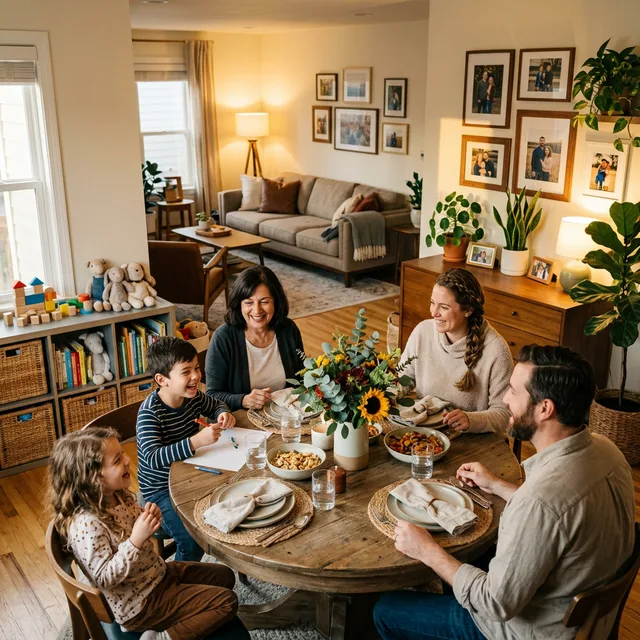
The dining table is the single most important piece of furniture in a family home. It's where the family gathers, shares meals, talks, argues, reconciles, and bonds. Its shape, material, and seating arrangement directly influence family dynamics.
| Table Shape | Energy | Family Effect |
|---|---|---|
| Round | Metal element, equality, unity | ⭐ Best for families. No "head" seat = everyone is equal. Promotes conversation and harmony. Children feel included, not subordinate. |
| Oval | Metal + flow | Excellent. Combines round's equality with length for larger families. Smooth energy circulation. |
| Rectangle | Wood element, hierarchy | Traditional but creates power dynamics. The person at the "head" dominates. Good if you want clear parental authority. |
| Square | Earth element, stability | Intimate for families of 4. Each person gets a "side" = territory. Can create divisions if family has conflict. |
Seating Arrangement Rules:
- Head of household: Should sit facing the entrance to the dining room (Command Position). This person "presides" over the meal and can see who enters.
- Children: Face away from distractions (TV, windows to the yard). Facing a wall or the parents helps focus during meals.
- Arguing family members: Seat them next to each other, not across. Facing each other intensifies conflict. Side-by-side promotes cooperation.
- The center: Keep a centerpiece — flowers, a fruit bowl, or a candle — on the table. An empty table center = "nothing to share."
Kids' Room Design by Age
| Age | Energy Need | Colors | Key Features |
|---|---|---|---|
| 0-3 (Baby) | Yin dominant — calm, safe, nurturing | Soft pastels, warm cream, light pink/blue | Crib against solid wall (not window), dim lighting, soft textures, minimal decor |
| 3-6 (Toddler) | Balanced — creative play + winding down | Gentle yellow, soft green, peach | Defined play zone vs. sleep zone, low shelving, soft rug for floor play, nightlight |
| 6-12 (School Age) | Yang rising — study, creativity, independence | Brighter greens, warm blues, creative accents | Desk in Command Position, study area separate from play, inspiration wall, organized storage |
| 12-18 (Teen) | High yang — identity, privacy, self-expression | Teen's choice with parental guidance on extremes | See Teen section below — autonomy is critical |
No matter the age: the bed should NEVER face the door directly (coffin position applies to children too) and should have a solid headboard and wall backing. Children are energetically more sensitive than adults — they absorb environmental chi faster. A well-placed bed = better sleep = better behavior = happier family.
Teen Room Autonomy Balance
This is the trickiest feng shui challenge in any family home. Teens need to express identity and claim territory while parents need to maintain energy harmony in the house.
The 3-Zone Approach:
- Non-negotiable Zone: Bed placement (Command Position, solid headboard), no mirrors facing bed, clean floor. These structural elements aren't up for debate — they protect sleep and health.
- Guided Zone: Color choices (avoid all-black rooms — too much Water/yin = depression), poster/art content (violent imagery affects subliminal chi), desk organization. Offer guidance but allow expression.
- Freedom Zone: Decorating style, music, personal items, organization system (within reason). This is their territory. Respect it. Forcing adult feng shui aesthetics on a teen's room creates resentment.
The Closed Door Agreement:
In feng shui, closed doors contain chi within each room. A teen's closed door is actually good feng shui — it prevents potentially chaotic teen energy from spreading through the house, and it gives the teen a contained space for identity development. Don't fight the closed door.
Shared Bathroom Rules
- Toilet lid down — always. This is the #1 family feng shui rule. Draining chi affects EVERYONE in the household. Make it a house rule.
- Each person gets a color: Assign each family member a towel and toothbrush color. This creates personal energy boundaries in a shared space.
- Keep surfaces clear: Counter clutter = stagnant family energy. Use vertical storage, drawer organizers, and behind-mirror cabinets.
- Ventilation is critical: Bathroom humidity breeds mold (yin/stagnation). Run the fan during and after every shower. Open windows when possible.
- A plant for balance: A bathroom-loving plant (Boston fern, pothos, snake plant) adds vital Wood energy to counter the excess Water element.
Playroom Organization as Feng Shui
A chaotic playroom doesn't just look messy — it creates scattered, hyperactive chi that affects the entire home. Organized play = calmer children.
- Containment system: Every toy category gets a bin, basket, or shelf. Labels help kids self-organize. The act of putting toys "away" is a chi containment practice.
- Rotation: Don't have all toys out at once. Rotate toys monthly — put half away, bring out others. Fewer visible toys = less overstimulation = more focused creative play.
- Creativity zone: Designate one area for art/messy play with an easy-clean surface. This zone can be yang and active. The rest of the playroom should be calmer.
- End-of-day ritual: Make cleanup a daily ritual, not a punishment. In feng shui terms, putting toys away at night "resets" the room's chi for rest hours. It teaches children that spaces have cycles — active yang time, then restful yin time.
- Broken toys: Remove immediately. Broken items carry "broken" energy. If the child notices, explain: "We're making room for something new!"
Sibling Room-Sharing Solutions
- Equal territory: Each child gets exactly equal space. Unequal room division creates resentment. A physically divided room (bookshelf, curtain) prevents territory disputes.
- Personal zones: Even in shared rooms, each child needs a spot that is ONLY theirs — a nightstand, a shelf, a pinboard. Shared everything = no personal chi = identity confusion.
- Bunk beds: The bottom bunk gets more yin (grounding, security), and the top bunk gets more yang (expansive, dominant). If one child is anxious, give them the bottom. If one is too passive, the top may help.
- Color coding: Each child gets their own color — bedding, storage bins, towels. Color creates psychological ownership without walls.
- Both beds in Command Position: Both children should be able to see the door from their bed. If one child's bed faces a wall, they will feel less secure and may have more nightmares.
Pet Integration
Americans love pets — 67% of US households own one. Pets bring powerful yang energy (movement, sound, life) but also introduce unique feng shui considerations:
| Pet | Energy Contribution | Feng Shui Tips |
|---|---|---|
| 🐕 Dogs | Yang, protective, loyal. Earth element. | Dog bed in the family room (social space), not blocking doorways. Dogs guard chi naturally. |
| 🐈 Cats | Yin/Yang balance, independent. Metal element. | Cats naturally seek good feng shui spots. Where your cat sleeps = good chi area. Let cats guide you! |
| 🐠 Fish | Water element, wealth activation. | Aquarium in the living room's North or SE sector. 8 goldfish + 1 black fish is the classic wealth formula. |
| 🐦 Birds | Fire element, joy, sound. | Place cages in the South sector (Fame) or social areas. Birdsong activates chi beautifully. |
Family Feng Shui Consultation
A family consultation addresses the unique challenges of multi-generational, multi-age households — from nursery design to teen room diplomacy to pet integration. Includes a full home audit with family-specific recommendations.
Book Family Consultation