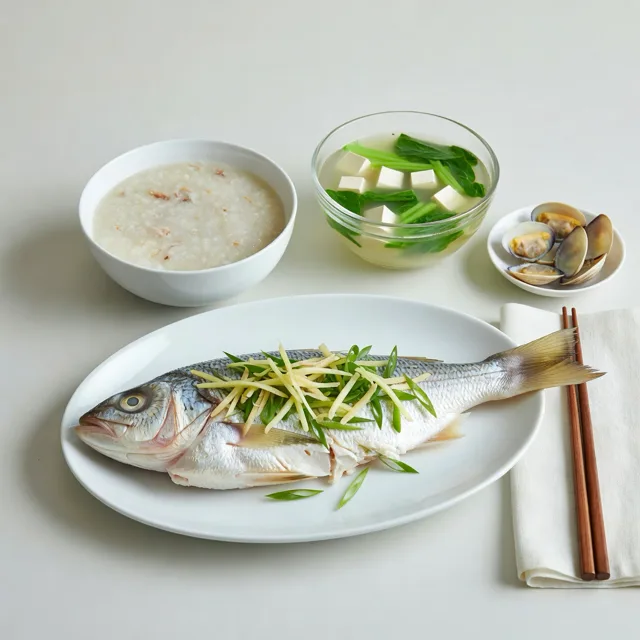
By late April, the heavy proteins of winter — lamb stews, bone broths simmered for hours, braised pork belly — start to feel like too much. Your body is telling you something. As Wood energy reaches its peak and the Spleen steps forward to manage increasing dampness, lighter proteins become the better match. And in Chinese food therapy, nothing fills that role more naturally than 鱼 (yú) — fish.
Fish is one of the most versatile proteins in TCM cooking. Most varieties are classified as neutral to slightly warm, easy to digest, and gentle on the Spleen. They are also symbolic — 鱼 sounds like 余 (yú, surplus), which is why a steamed whole fish appears at every reunion dinner. But you do not need a celebration to justify fish. In late spring, it is simply the smartest protein choice for a body transitioning between seasons.
This guide covers the TCM properties of common fish and seafood, five practical dinner preparations for the next week, and a few important rules about freshness and preparation in damp weather.
Table of Contents
Why Fish in Late Spring
The logic is simple. Late spring is the hinge between Wood season (Liver) and Fire season (Heart), with the Spleen stepping in as the intermediary. The Spleen's job is to transform food into energy and transport it. Heavy, rich, fatty foods burden the Spleen — exactly what you do not want during the damp weeks around 谷雨.
Fish is the opposite of heavy. A piece of steamed white fish breaks down quickly, delivers clean protein, and leaves the Spleen free to do its moisture-management work. In TCM terms, fish supports the Spleen without generating excess dampness (as long as you avoid frying it in heavy batter).
There is also an elemental fit. Fish lives in water, making it a natural carrier of Water element energy. In the generative cycle, Water feeds Wood. As Wood season reaches its zenith in April, fish provides the nourishing support that helps Wood complete its cycle gracefully before yielding to Fire.
TCM Properties by Type
Not all fish and seafood have the same TCM classification. Here is a guide to common varieties, arranged by their thermal nature:
| Type | TCM Nature | Flavor | Channels | Best Use |
|---|---|---|---|---|
| Carp (鲤鱼) | Neutral | Sweet | Spleen, Kidney | Reduces swelling, promotes urination. The classic fish for damp conditions. |
| Crucian carp (鲫鱼) | Neutral to warm | Sweet | Spleen, Stomach | Strengthens Spleen, benefits qi. The most-used soup fish in Chinese food therapy. |
| Sea bass / white fish | Neutral | Sweet | Spleen, Liver, Kidney | Nourishes Liver and Kidney yin. Excellent steamed with ginger and scallion. |
| Shrimp (虾) | Warm | Sweet | Kidney, Liver | Warms yang, strengthens Kidney. Good for cold constitutions even in spring. |
| Clams (蛤蜊) | Cold | Salty, sweet | Stomach, Liver | Clears heat, drains dampness. Always cook with ginger and rice wine to offset the cold nature. |
| Mussels (淡菜) | Warm | Salty | Kidney, Liver | Nourishes Kidney, strengthens sinews. A warming shellfish — less common concern than clams. |
| Salmon | Neutral to warm | Sweet | Spleen, Stomach | Nourishes Spleen, benefits qi and Blood. Cook through in spring — save sashimi for summer. |
5-Dinner Plan for Late April
Here are five fish-centered dinners to rotate through the last week of April. Each is designed to be light, quick, and supportive of the Spleen during damp weather.
Dinner 1: Classic Steamed White Fish
A whole small sea bass or portion of white fish, steamed with ginger slices, scallion, a splash of soy sauce, and a drizzle of hot oil at the table. For the full method, see our steamed fish guide. Serve with steamed rice and a side of stir-fried greens. Total time: 20 minutes.
Dinner 2: Fish Congee
Cook a plain rice congee (1/2 cup rice to 6 cups water, simmered until soft). In the last 5 minutes, add thin slices of white fish fillet, fresh ginger slivers, and a pinch of white pepper. The fish cooks in the residual heat. Finish with scallion and a drop of sesame oil. This is the single most digestible fish preparation in Chinese food therapy.
Dinner 3: Clear Fish and Tofu Soup
Simmer a crucian carp (or any small fish) in water with ginger for 20 minutes until the broth turns milky white. Add cubed soft tofu and a handful of greens (spinach or watercress). Season lightly with salt. This is a Spleen-strengthening classic — the milky broth is considered deeply nourishing in food therapy.
Dinner 4: Garlic Shrimp With Greens
Quick-stir-fry medium shrimp with garlic, a touch of ginger, and a splash of rice wine. Set aside. In the same pan, wilt a pile of pea shoots or bok choy with a pinch of salt. Plate the greens, top with shrimp. The warmth of the shrimp balances the slight cooling nature of the greens.
Dinner 5: Clam and Winter Melon Soup
Simmer sliced winter melon (冬瓜) in light broth with ginger and a splash of rice wine. When the melon is translucent, add rinsed clams and cover. Cook until the shells open (discard any that do not). The ginger and rice wine warm the cold clams, and the winter melon gently drains dampness. A light, elegant bowl for a rainy evening.
Pair any of these dinners with a cup of green tea or a light spring soup as a first course.
Clams & Mussels: Cool With Caution
Shellfish are popular in late spring, but they require more careful handling from a TCM perspective. Clams in particular are classified as cold (寒), which means they can chill the Spleen if eaten in large quantities or without warming accompaniments.
The ginger-wine rule
In Chinese cooking, clams and crab are almost always prepared with fresh ginger and Shaoxing rice wine. This is not just for flavor — it is a deliberate TCM strategy. The warm, pungent ginger and the warm, moving quality of rice wine counteract the cold nature of the shellfish, making them safer for digestion.
If you tend toward a cold constitution — cold hands, preference for warm drinks, pale complexion — go easy on clams and stick to shrimp and mussels, which are warmer in nature. If you run warm, clams are a good fit for the occasional late-spring meal.
Buying Fresh in Damp Weather
Damp, warm weather is a breeding ground for bacteria. Fish and seafood spoil faster in humid conditions. A few practical rules:
- Buy the day you cook. In late April's warmth, same-day purchase is the safest approach for fresh fish.
- Use your nose. Fresh fish smells like the ocean or a clean river — mild and slightly briny. Any strong fishy, ammonia, or sour smell means it is past its prime.
- Check the eyes and gills. Clear, bright eyes and red gills mean freshness. Cloudy eyes and brown gills mean the fish has been sitting.
- Transport cold. Bring an insulated bag or ask for ice at the fish counter. Even 20 minutes in a warm car can start degradation.
- Frozen is fine. Flash-frozen fish (especially from responsible fisheries) can be fresher than "fresh" fish that sat in a case for two days. Thaw in the refrigerator overnight, not on the counter.
Sustainable choices
When possible, choose sustainably sourced fish. Wild-caught Pacific salmon, US-farmed catfish, and farmed mussels and clams are generally considered responsible choices. Your fish counter staff can point you toward locally available sustainable options.
Why Not Raw or Cold in Damp Season
Sushi lovers, I hear you — but late spring is not the ideal season for raw fish from a TCM perspective. Here is why:
Raw food requires the Spleen to work harder to "cook" it internally. During damp weather, the Spleen is already straining under the moisture load. Adding cold, raw protein compounds the burden. Classically, this is when people are most likely to develop what TCM calls "food stagnation with dampness" — bloating, nausea, and digestive discomfort after eating.
The same applies to chilled seafood salads and cold shrimp cocktail. If you enjoy these, at least pair them with warm ginger tea and do not eat them on an empty stomach.
Save the sashimi for the heat of summer when your body's yang is at its peak and can handle the cold. In April, cook your fish through — steaming, simmering in soup, and quick stir-frying are all excellent methods that preserve flavor while supporting digestion.
⚠️ Disclaimer: The food therapy guidance in this article reflects traditional Chinese medicine perspectives on seasonal eating. If you have seafood allergies, are pregnant, or have a medical condition that affects your diet, consult your doctor before making dietary changes. Always ensure fish and seafood are thoroughly cooked to safe internal temperatures.
Your Seasonal Diet, Personalized
Your BaZi chart reveals whether your constitution runs warm or cold, damp or dry — and which proteins serve you best in each season. A consultation takes the guesswork out of your plate.
Book Your Consultation