农历: 丙午年 九月十六 (Fire Horse Year, 9th Lunar Month Day 16)
宜 (Auspicious): 祈福 (Pray) · 纳采 (Harvest) · 进补 (Take Tonics) · 纳财 (Receive Wealth)
忌 (Avoid): 安葬 (Burial) · 动土 (Break Ground)
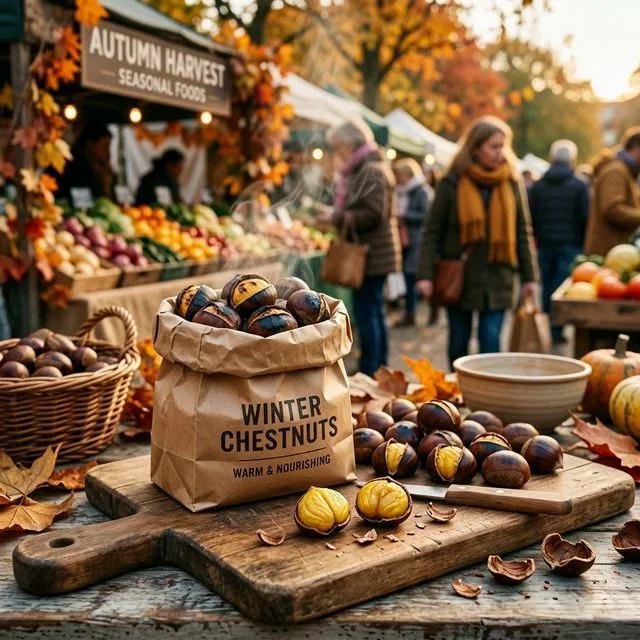
🌰 "宜纳采·进补" — Harvest + tonic day. The smell of 糖炒栗子 (sugar-roasted chestnuts) from street vendors is autumn's signature perfume.
板栗 (bǎnlì) — chestnut — is called the "King of Dried Fruits" (干果之王) in Chinese food culture and the "Kidney Fruit" (肾之果) in TCM. Classified as warm in nature, sweet in flavor, entering the Kidney, Spleen, and Stomach channels. It tonifies the Kidney, strengthens the Spleen, strengthens tendons and bones. Late October sits right at the crossover point in TCM's seasonal logic: autumn's dryness is fading, the first real cold is only weeks away, and the body's focus is shifting from Lung protection toward the Kidney reserves it'll lean on all winter. Chestnut is one of the most direct foods for building that reserve before the cold fully arrives.
Table of Contents
TCM Benefits
| Benefit | Details |
|---|---|
| 🦴 Kidney + bone support | "补肾强骨" — supplements Kidney, strengthens bones. Kidney governs bones in TCM. Chestnut nourishes Kidney-yang directly. Ideal pre-winter kidney prep. |
| 💪 Tendon + muscle strength | "活血止血" — promotes blood flow, stops bleeding. Traditionally used for weak legs, lower back ache, and chronic fatigue. |
| 🟡 Spleen boosting | Sweet flavor enters Spleen. Strengthens digestion. Especially good for elderly with weak digestion — gentle, warming, easily assimilated. |
| 🍂 Seasonal protection | Warm nature counters deepening cold. Provides sustained warming energy — like an internal hand-warmer that works for hours after eating. |
5 Chestnut Recipes
| # | Recipe | Method |
|---|---|---|
| 1 | 🌰 Sugar-roasted (糖炒栗子) | Score chestnuts. Roast with black sand + maltose sugar in a wok (or oven 425°F 25 min). The street vendor classic. The caramelized shell is part of the experience. |
| 2 | 🍗 Chestnut chicken (板栗焖鸡) | Braised chicken pieces with chestnuts, soy sauce, ginger, star anise. Simmer until chestnuts absorb sauce. The iconic autumn dish across China. |
| 3 | 🥣 Chestnut congee | Peeled chestnuts + rice + red dates + goji. Simmer 40 min. Mash chestnuts slightly for creamier texture. Warming breakfast for cold mornings. |
| 4 | 🍰 Chestnut cake (栗子糕) | Steam and mash chestnuts. Mix with sugar + butter. Press into molds. Refrigerate. Traditional Chinese-style petit four — elegant, simple, no oven needed. |
| 5 | 🍲 Chestnut + pork rib soup | Pork ribs + chestnuts + corn + carrots. Simmer 2 hr. Salt to taste. A supremely nourishing autumn-winter soup with bone and kidney support. |
Roasting Chestnuts at Home Like a Street Vendor
Street vendors roast in a wok with hot black sand and maltose sugar for even heat and that signature glossy caramelized shell — hard to replicate exactly at home, but an oven gets close. Score every chestnut first: a single deep slit or an X cut through the flat side into the flesh. This isn't optional — an unscored chestnut can build up steam pressure and pop, sometimes loudly, in a hot oven. Soak the scored chestnuts in water for 10 minutes (loosens the shell for peeling later), pat dry, and roast at 425°F (220°C) for 20-25 minutes on a single layer, shaking the tray halfway through. They're done when the scored edges curl back and the shell separates easily from the flesh.
How to Pick Good Chestnuts
| Sign | What It Means |
|---|---|
| Glossy, taut shell | Fresh. This is what you want. |
| Dull, wrinkled shell | Old stock that's been drying out — flesh will be shrunken and less sweet. |
| Heavy for its size | Good sign — indicates moisture content is still high. |
| Rattles when shaken | The nut has dried and separated from the shell — skip it. |
| Small pinholes in the shell | Insect damage — discard, since the flesh underneath is usually compromised too. |
October's Window: Fresh Chestnuts Don't Last Long
Fresh chestnut season runs roughly September through November, peaking right around now. By December, fresh chestnuts get scarcer and pricier as vendors shift to vacuum-packed or frozen stock — good enough for congee and braises, but noticeably less fragrant than fresh-roasted. This is exactly why chestnut season overlaps with the broader "pre-winter Kidney prep" window in TCM: October's chestnut and black sesame build the Kidney reserve that November's black bean continues once the cold has properly set in.
Common Chestnut Mistakes
| Mistake | Why It Backfires |
|---|---|
| Eating them raw | Raw chestnut starch is hard to digest and can cause bloating. Always cook first. |
| Roasting without scoring the shell | Steam pressure builds inside an unscored shell and can cause it to burst in the oven. |
| Expecting vacuum-packed chestnuts to taste like fresh-roasted | They're softer and less fragrant — fine for congee or braises, disappointing eaten plain. |
| Eating well past the 6-10/day guideline | High starch content causes bloating and gas at higher quantities — this isn't an unlimited snack. |
| Storing shelled chestnuts at room temperature for days | They mold and dry out quickly once shelled — refrigerate in a sealed container and use within a few days, or freeze for longer storage. |
Frequently Asked Questions
Fresh, roasted and peeled yourself, gives the best flavor for congee and cakes. Vacuum-packed, pre-cooked chestnuts are a reasonable shortcut for the braised chicken or soup recipes, where they're simmered alongside other strong flavors anyway.
In moderation. Chestnuts are high in starch compared to most nuts, so portion size matters more than for something like walnuts — stick toward the lower end of the 6-10/day range and monitor your own response.
Usually a sign the nut was already past its prime before cooking — the dull-shell and rattle signs above help you avoid this at the point of purchase. A bitter or off taste after cooking means it's best discarded rather than eaten through.
Refrigerate shelled, cooked chestnuts in an airtight container for up to 3-4 days, or freeze for a couple of months. Reheat gently — a quick steam or a low oven — rather than microwaving hard, which can toughen the texture.
No — a common point of confusion. This guide's 板栗 chestnut is a tree nut with a warm, Kidney-tonifying TCM profile. Water chestnut (荸荠) is an aquatic tuber, classified as cooling rather than warming, and used in entirely different dishes. Don't substitute one for the other.
The scoring step is specific to chestnuts because of their high moisture content and hard shell — most other nuts (walnuts, almonds) don't need it and roast at different times and temperatures. Treat this method as chestnut-specific rather than a general nut-roasting template.
⚠️ Disclaimer: Chestnut is a nutritious food — not a medical treatment. "Kidney tonification" is a TCM concept. Chestnuts contain moderate calories (213 kcal/100g) and high starch; diabetics should monitor intake. Limit to 6-10 chestnuts per day — excessive consumption causes bloating and gas. Raw chestnuts are hard to digest; always cook. Chestnut allergy exists in some individuals. The "Kidney Fruit" nickname is traditional, not a clinical designation.
Kidney Season Prep
Winter = Kidney season. How strong are YOUR kidneys going in? Your BaZi + tongue diagnosis reveals your Kidney yin-yang balance and the exact pre-winter tonic strategy.
Book Kidney Assessment