农历: 丙午年 十月十八
宜: 祈福 · 进补 · 沐浴 · 纳财
忌: 安葬 · 动土
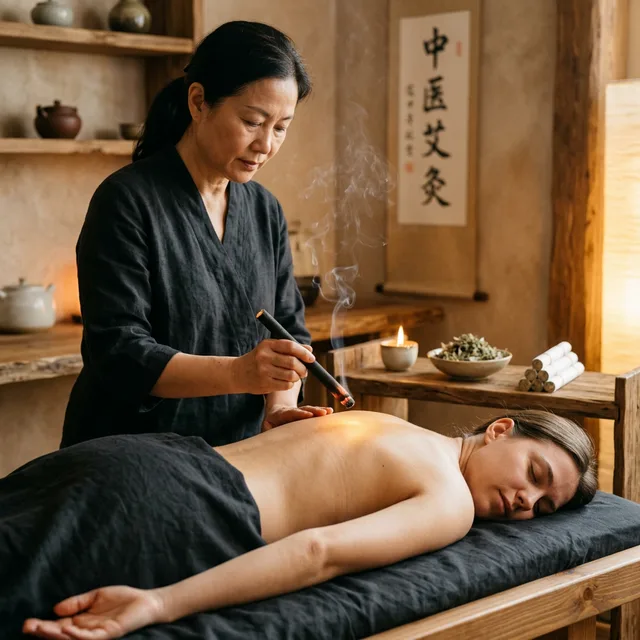
🔥 "针之不及,灸之所宜" — Where needles cannot reach, moxibustion is appropriate. 艾灸 is one of TCM's oldest therapies — recorded in the 黄帝内经 over 2,000 years ago.
艾灸 (àijiǔ / moxibustion) is the practice of burning dried mugwort (艾草) near or on the skin at acupuncture points. The heat penetrates deeply, warming channels, driving out cold, and boosting yang qi. October favored lighter, preventive moxa if any at all; by late November, cold-damp has properly settled in and yang has retreated further, so moxibustion becomes the most direct warming therapy available — and, as we approach 冬至 (Dongzhi) in December, the point in the year classical TCM calls "一阳生" (the moment a single thread of yang begins to return), traditionally considered the single best window for tonifying treatments like this one.
5 Key Winter Acupoints
| Point | Location | Benefit |
|---|---|---|
| 🌀 关元 (Guānyuán) | 3 inches below navel, on midline | "Gate of origin" — tonifies Kidney yang, warms uterus, strengthens the root of life force. THE #1 winter moxa point. |
| 🌊 足三里 (Zúsānlǐ) | 3 inches below kneecap, outer side of shinbone | "Leg three miles" — strengthens Spleen + Stomach, boosts immunity, overall vitality. "常灸足三里,胜吃老母鸡" — regular moxa here beats eating old hen soup. |
| 💪 命门 (Mìngmén) | On spine, opposite the navel | "Gate of life" — directly fires up Kidney yang. For severe cold constitution, low back pain, sexual weakness, chronic fatigue. |
| 🟡 神阙 (Shénquè) | Center of navel (belly button) | "Spirit gate" — warms the Middle Burner. For diarrhea, bloating, cold abdomen. Moxa box over navel is deeply comforting and warming. |
| 🦶 涌泉 (Yǒngquán) | Bottom of foot center (when toes curl) | "Gushing spring" — first point of Kidney channel. Grounds upward-flowing yang, calms anxiety, warms cold feet from the root up. |
🚫 Do NOT moxa if: Fever (adding heat to heat = dangerous). Yin deficiency with heat signs (night sweats, hot palms, dry mouth). Pregnancy (关元 and lower belly are strictly forbidden). Active skin lesions, inflammation, or infection at the moxa site. Intoxicated. Very full stomach. Over age-appropriate limits without professional guidance.
Home Moxa Techniques
| Technique | How It Works | Best For |
|---|---|---|
| Moxa stick (艾条), indirect | A rolled mugwort cigar, lit at one end, held 1-2 inches above the skin — never touching it. This is the standard, lowest-risk home method. | Single points like 足三里 or 涌泉. |
| Moxa box (灸盒) | A perforated wooden box holding a lit moxa segment, placed directly over a larger area of skin so heat diffuses evenly. | Broad areas like the lower abdomen (关元 + 神阙 together) or lower back. |
| Smokeless moxa patches | Adhesive, self-heating patches with a small mugwort core — no open flame, minimal smoke. | Apartments, sensitive smoke detectors, or anyone who can't tolerate the smoke. |
| Direct (non-scarring) moxa | A tiny cone of moxa is burned nearly to the skin, then removed before it touches. Requires real skill to avoid burns. | Practitioner clinics only — not recommended for home use. |
Basic Home Moxa Session (Moxa Stick Method)
| # | Step | Details |
|---|---|---|
| 1 | Choose your point | Start with 足三里 (Zúsānlǐ) — safe, versatile, and easy to locate on yourself. |
| 2 | Light the stick | Until the tip glows like a cigar ember, in a well-ventilated room with a window cracked. |
| 3 | Hold 1-2 inches above the point | Move in slow circles, or use "sparrow pecking" (雀啄灸) — gently moving the glowing tip up and down like a bird pecking, without touching skin. |
| 4 | Watch for even, warm redness | 10-15 minutes per point is typical. Stop immediately if it becomes hot or uncomfortable rather than warm. |
| 5 | Extinguish safely | Snuff the lit end in a sealed jar of sand or water — never in an open ashtray, since moxa embers can smolder for a long time. |
| 6 | Ventilate after | Keep airflow going for 15-20 minutes post-session; moxa smoke lingers and can trigger headaches in a closed room. |
How Long & How Often
A traditional home course is 10 sessions on one or two points, then a break of several days before starting again — not indefinite daily use on the same point. 足三里 and 关元 are typically done every day or every other day for the course; 命门 and 神阙, being more intensely warming, are better at 2-3 times a week unless a practitioner has advised otherwise.
Common Moxibustion Mistakes
| Mistake | Why It's Risky |
|---|---|
| Holding the stick too close "to feel it more" | The single most common cause of home moxa burns. Warmth, not heat, is the target. |
| Moxa near an active smoke detector without disabling it first | Triggers false alarms — disable before your session and reactivate immediately after, every time. |
| Moxa on an empty or very full stomach | Can cause lightheadedness on an empty stomach, or discomfort from the added warmth on a full one. |
| Skipping ventilation | Smoke buildup in a closed room is the most common reason people report headaches "from moxa" — it's the smoke, not the therapy itself. |
| Continuing after the skin turns deep red or blisters | A sign the technique is too close or too long — stop, cool the area, and reassess distance and duration before your next session. |
Frequently Asked Questions
A stick targets one small point at a time and gives you full control over distance and movement. A box covers a wider area (like the whole lower abdomen) at once but is less precise — good for warming a region rather than a single acupoint.
Yes, they layer well — many practitioners do a moxa session on 足三里 followed later by an herbal foot soak, or gentle tai chi earlier in the day. Avoid stacking moxa directly before or after a hot foot soak on the same points, since both add heat and you risk overdoing it.
Moxa smoke is a combustion byproduct, so treat it like any other smoke: ventilate well, don't do daily sessions in a sealed room, and consider a smokeless patch if you have asthma, are pregnant (though pregnancy already rules out moxa on most points), or are sensitive to smoke generally.
Traditional practice describes a course of around 10 sessions before evaluating results. The evidence base for specific outcomes is limited — treat any change as anecdotal rather than guaranteed, and stop if you notice no benefit or any adverse reaction.
No — traditional practice uses a course-and-rest pattern rather than open-ended daily use. Continuous daily moxa on the same point without a break is not the traditional protocol and increases irritation risk with no added benefit.
⚠️ Disclaimer: Moxibustion is recognized by the WHO as a traditional medicine practice. Some research supports its use for breech presentation turning, osteoarthritis pain, and irritable bowel syndrome. However, the evidence base is limited, and many claimed benefits lack robust clinical trial support. Home moxibustion carries burn risk — always use indirect methods (moxa box, moxa stick held 1-2 inches above skin). Ventilate well (moxa produces significant smoke). Start with professional guidance before attempting home practice. This article is educational — not medical advice.
Moxa Protocol
Which points does YOUR body need? A professional moxa consultation identifies your cold-pattern blockages and creates a targeted point protocol for at-home winter warming.
Book Moxa Consult