农历: 丙午年 十月十一
宜: 祈福 · 沐浴 (Bathe) · 进补 · 纳财
忌: 安葬 · 动土
🦶 "宜沐浴" — Bathing day. "树枯根先竭,人老脚先衰" — When a tree dies, roots die first. When a person ages, feet age first. Foot soaking = root nourishment.
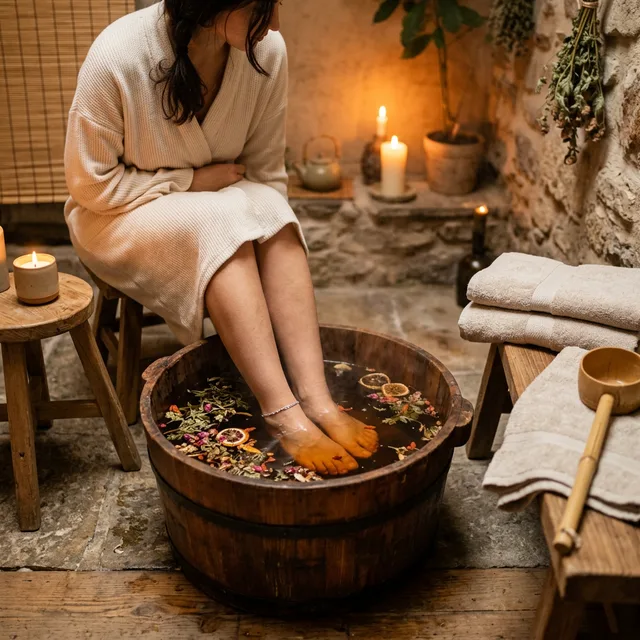
We covered basic foot soaking in October. Now let's go deeper: herbal foot soaks are transdermal medicine — medicinal ingredients absorbed through the 涌泉穴 (Yǒngquán) point, located in the front third of the sole, in the depression that appears when you curl your toes, plus 60+ other acupoints across the foot soles. By late November the cold has moved past October's "keep it out" stage into "actively drive it out": water runs hotter, soaks run longer, and which herbs go in the basin starts to matter. Each recipe below targets a specific constitution.
5 Herbal Foot Soak Recipes
| Recipe | Herbs | Best For |
|---|---|---|
| 🌿 Mugwort (艾叶) | Dried mugwort 30g + water. Boil 15 min, cool to 40-42°C | Cold constitution, period pain, cold hands/feet. Mugwort warms channels, drives out cold-damp. The classic winter soak. |
| 🫚 Ginger blast | 5 thick ginger slices + Sichuan pepper 10g + hot water | Coming-down-with-a-cold prevention. Emergency warming. Ginger disperses surface cold before it deepens. Use at FIRST sign of cold. |
| 🌸 Safflower (红花) | Safflower 10g + Dang Gui slices 15g + hot water | Blood stagnation: purple lips, menstrual clots, dark circles. Activates blood circulation, especially in lower body. |
| 🍊 Citrus peel | Dried tangerine peel (陈皮) 20g + ginger 3 slices | Bloating, poor digestion, qi stagnation. Citrus peel moves qi, ginger warms. Light, fragrant, mood-lifting soak. |
| 🧂 Salt + vinegar | Coarse salt 2 tbsp + rice vinegar ½ cup + warm water | Athlete's foot, foot odor, calluses. Antifungal, softening, and deeply cleansing. Weekly maintenance soak. |
💡 Rules: Temperature 40-42°C (not hotter — damages skin). Duration 15-20 min (not longer — over-dilates blood vessels). Best time: 9 PM (Kidney channel active hour). Stop when light sweat appears on forehead = qi is circulating. Never soak hungry or immediately after eating.
The 三阴交 Water-Level Rule
Basic foot soaks only need to cover the ankle. Advanced herbal soaks work better when the water rises to mid-calf, covering a second point: 三阴交 (Sānyīnjiāo), about 3 cun (roughly four finger-widths, measured with your own fingers held together) above the inner ankle bone, just behind the shinbone. This is the meeting point of the Spleen, Liver, and Kidney channels, so soaking it alongside 涌泉穴 doubles the channels being warmed. Important: 三阴交 is a classic contraindicated point in pregnancy — pregnant readers should stick to ankle-depth, plain warm-water soaks only (see the disclaimer below).
Your Winter Foot Soak Protocol
| # | Step | Details |
|---|---|---|
| 1 | Choose your basin | Wood or ceramic, not thin plastic or metal. Metal cools the water fast and pits under repeated herb tannins; thin plastic can leach at soak temperature. |
| 2 | Brew, don't dump | Simmer herbs 15-20 min in a separate pot first (per the recipes above), then strain into the basin and dilute with warm water to temperature. Raw herbs tossed straight into the basin barely release their compounds. |
| 3 | Check temperature properly | 40-42°C, verified with a bath thermometer — not by feel. Diabetics and anyone with neuropathy MUST use a thermometer; reduced sensation hides burns until they're severe. |
| 4 | Fill to mid-calf | Water should cover both 涌泉穴 and 三阴交 (see above) — roughly 10-12cm up the shin, not just the ankle. |
| 5 | Sit upright, 15-20 min | Spine straight, shoulders relaxed. Hunching over a phone or bowl compresses the abdomen and slows the circulation the soak is meant to encourage. |
| 6 | Stop at the first sweat | A light dampness on the forehead or nose means qi is circulating — that's the endpoint, not a signal to keep going. Dry feet thoroughly (especially between toes), moisturize while skin is still damp, and put on socks before standing on a cold floor. |
October → November → December: How the Practice Deepens
| Month | Focus | Practice |
|---|---|---|
| October (basics) | Prevention | Plain warm water or a few ginger slices, 10 minutes, ankle-deep. The body is still adjusting out of autumn. |
| November (this guide) | Treatment | Constitution-matched herbal formulas, 15-20 minutes, mid-calf. Cold has settled in; yang needs active support. |
| December (approaching 冬至) | Yang building | Add warming tonics like cinnamon bark (肉桂) or dried Sichuan pepper to the mugwort base; soaks can safely extend toward 20-25 minutes once the body has adapted to the routine. |
Common Foot Soak Mistakes
| Mistake | Why It Backfires |
|---|---|
| Water hotter than 42°C "for a stronger effect" | Damages skin, dilates vessels too aggressively, and can cause dizziness on standing. Heat is not linear with benefit. |
| Soaking right after a full meal | Diverts blood to the extremities while digestion needs it most. Wait at least 60 minutes after eating. |
| Reusing the same herb water for multiple days | Potency drops fast after the first use, and standing herbal liquid at room temperature grows bacteria quickly. Brew fresh each session. |
| Soaking past the sweat point | Once light sweat appears, more time doesn't mean more benefit — it means yang qi is now leaving through open pores, the opposite of what a winter soak is for. |
| Soaking over broken skin, cuts, or active fungal infection | Warm herbal water can worsen open wounds and spread fungal infections like athlete's foot to unaffected skin. |
Frequently Asked Questions
Yes, for plain or mild recipes (mugwort, citrus peel). Stronger blood-moving formulas like safflower are best limited to 3-4 nights a week so the body isn't constantly pushed to circulate — give it rest nights too.
October's foot soaking basics guide covers plain warm water for general winter prevention. This guide adds constitution-specific herbal recipes, deeper water levels that reach 三阴交, and longer soak times — appropriate once cold has properly set in.
Plain warm water or a very mild ginger soak is fine for children over 6 and for elderly family members, but halve the soak time to 8-10 minutes and check temperature with a thermometer, not the child's own sense of "too hot." Skip the stronger blood-moving recipes (safflower) for both groups without a practitioner's guidance.
Warm water immersion before bed is documented to lower core body temperature faster afterward — the drop that helps trigger sleep onset — and to improve peripheral circulation. The "transdermal medicine" claim about specific herbs is TCM theory rather than clinical fact; treat the herbs as a traditional, low-risk addition on top of a genuinely useful warm-water habit.
Match your main complaint to the "Best For" column above — cold hands and period pain point to mugwort, dark under-eye circles and menstrual clots point to safflower, and so on. For a precise read on your constitution, see our body constitution guide or book a tongue-and-pulse consultation.
⚠️ Disclaimer: Foot soaking is a low-risk traditional practice with documented benefits: warm water immersion improves peripheral circulation, reduces stress, and promotes relaxation. "Transdermal absorption" through foot skin is a TCM concept — while skin can absorb some compounds, the extent is debated in dermatological research. Diabetics and those with peripheral neuropathy must test water temperature with a thermometer (not by feeling) to avoid burns. Avoid foot soaks during active infections, open wounds, or if pregnant (mugwort and safflower are contraindicated in pregnancy).
Custom Soak Formula
Your constitution determines which herbs belong in YOUR soak. A tongue + pulse diagnosis reveals the precise herbal combination for maximum benefit — not a one-size-fits-all recipe.
Book Consult