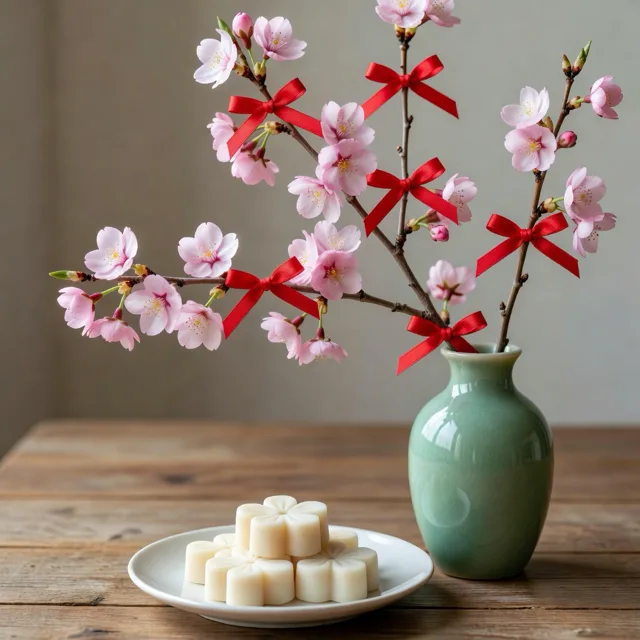
There is a day on the Chinese calendar that almost nobody in the West has heard of, and it might be the most charming one of the entire year. 花朝节 (Huāzhāo Jié) — the Flower Festival — is traditionally celebrated on the twelfth day of the second lunar month, which this year falls on Friday, March 19, 2027. Some regions keep the fifteenth of the second month instead — the full moon — which is Monday, March 22. Either way, the idea is the same: today is the birthday of the flowers.
Yes, flowers have a birthday. In Chinese folk tradition, the Flower Festival marks the day when the flower goddess 花神 (Huā Shén) descends to awaken the blossoms. It is the floral counterpart to the Mid-Autumn Festival — one celebrates the full moon of autumn, the other celebrates the full bloom of spring. Historically, young women would go on blossom-viewing outings, tie red ribbons or red paper strips to the branches of flowering trees, eat flower-shaped cakes, and spend the day among gardens and orchards.
Today, 花朝节 has faded from mainstream observance even in China, surviving mainly among Hanfu communities and traditional-culture enthusiasts. But its core practice — bringing the beauty of fresh flowers into your life and your home — is more relevant than ever, and feng shui has specific rules about how to do it well.
Table of Contents
花朝节 Customs: Ribbons, Cakes & Outings
The traditions associated with 花朝节 are gentle, joyful, and centered on appreciation rather than obligation.
赏红 (Shǎng Hóng) — Hanging Red Ribbons
The most recognizable custom is 赏红 — tying strips of red cloth or red paper to the branches of flowering trees. The red represents blessings and good fortune shared with the flowers. In some regions, people would write wishes on the paper before tying it. The image of a blooming cherry or peach tree with red ribbons fluttering among white and pink petals is one of the most visually striking scenes of the Chinese spring calendar.
If you have a flowering tree in your yard — cherry, crabapple, plum, magnolia — you can observe this custom simply: tie a small red ribbon to a branch on the morning of March 19. It is a gesture of gratitude to the season.
花糕 (Huā Gāo) — Flower Cakes
Flower cakes are small rice cakes or pastries decorated with edible flower petals or flower-shaped stamps. Traditionally these were made with glutinous rice flour, filled with sweet bean paste, and topped with petals from osmanthus, rose, or chrysanthemum. Modern bakeries in China sometimes revive the tradition around 花朝节 with elaborate floral pastries. At home, any cake or cookie decorated with edible flowers captures the spirit.
踏青赏花 (Tàqīng Shǎnghuā) — Blossom Outings
花朝节 was historically one of the year's big outdoor occasions, especially for women who spent most of their time indoors. Groups would visit gardens, orchards, and temple grounds to view the early blossoms, compose poetry, and enjoy the spring air. This tradition is closely linked to 踏青 (tàqīng) — "treading the green" — the broader spring walking custom.
For a modern take, plan a visit to a botanical garden, arboretum, or any neighborhood with blooming ornamental trees this weekend. Bring tea in a thermos. Leave the phone in your pocket for at least twenty minutes. Look at the flowers like they are the main event — because today, they are.
A Modern Observance
You don't need to stage a full festival. Here is a simple way to mark 花朝节 on Friday, March 19:
- Morning: Buy a fresh bouquet or cut stems from your garden. Place them on the dining table or in the living room.
- Midday: Take a walk among trees or gardens. Notice what is blooming. If you have a flowering tree, tie a red ribbon.
- Afternoon: Make or buy a flower-shaped pastry. Chrysanthemum tea or rose tea pairs well.
- Evening: Open a window briefly to let spring air through the house. The scent of evening blossoms drifting indoors is its own kind of feng shui.
The point is attention. 花朝节 asks you to stop and notice that the world is in bloom. In a season when most of us are rushing through our to-do lists, that pause has real value.
Fresh Flowers Indoors: The Feng Shui Rules
Fresh flowers bring powerful Wood element energy into a space — living, fragrant, colorful, and temporary. That last quality is important: the energy of fresh flowers is vibrant but fleeting, which means they require attention. Dead or wilting flowers carry stagnant, declining qi. In feng shui, a vase of dying flowers is worse than no flowers at all.
The Core Principles
| Rule | Why |
|---|---|
| Fresh only | Fresh flowers carry living qi. Dried flowers carry past-tense energy — they have already peaked and are in decline. In the wealth corner or dining room, dried flowers symbolize waning fortune. |
| Change water every 2 days | Stagnant water breeds bacteria and, in feng shui terms, stagnant qi. Clean water keeps the flowers' energy clear and the vase from smelling. |
| Remove dying blooms immediately | One wilted flower in a fresh arrangement drags the energy of the entire group down. Trim stems and remove spent blooms daily. |
| Odd numbers (3, 5, 7 stems) | Odd numbers are yang — active, growing, forward-moving. Even numbers are yin — suitable for more restful spaces, but odd numbers are preferred for areas where you want vitality. |
| Match the vase to the element | A ceramic or earthenware vase (Earth) grounds the Wood energy of the flowers. A glass vase (Water) feeds it. A metal vase (Metal) clashes — use sparingly. Choose based on what the sector needs. |
Where Flowers Help in 2027
Based on the 2027 annual chart and general feng shui principles, here is where fresh flowers do the most good this spring:
| Location | Why It Works |
|---|---|
| Dining table | The dining table is the heart of family qi. Fresh flowers here lift the energy of every meal, encourage conversation, and bring Wood vitality to shared time. This is the single best spot for a spring bouquet. |
| SE sector | Star 8 (wealth star) in the SE this year benefits from living Wood energy. A small vase of fresh flowers here — replaced weekly — is one of the simplest wealth-sector activations. |
| South sector | Star 4 (academic and romance star) is naturally a Wood star. Flowers here support creativity, learning, and relationships. Soft pink or peach tones are especially fitting. |
| Living room entrance area | Flowers near the entryway greet arriving qi with freshness and vitality. They signal a home that is cared for and alive. |
For a comprehensive guide to plant placement — including potted plants vs. cut flowers and what works in each Bagua sector — see the full plants guide. For 2027-specific placement, the 2027 plant placement update has details.
What to Avoid with Indoor Flowers
Thorny Stems in the Bedroom
Roses are beautiful, but their thorns carry 煞气 (shàqì) — sharp, piercing energy. In a living room or dining room, the beauty outweighs the thorns. In a bedroom, where the goal is soft, receptive yin energy, thorny stems create subtle tension. If you love roses in the bedroom, choose thornless varieties or have the thorns stripped by the florist.
Faux Flowers in the Wealth Corner
Artificial flowers — silk, plastic, paper — carry no living qi. They are decorative, not energetic. In most rooms this is neutral. But in the wealth corner or the SE sector (Star 8 this year), faux flowers are a missed opportunity at best and a symbol of "fake growth" at worst. If you cannot maintain fresh flowers, a healthy green plant is always the better choice.
Dried Flowers and Potpourri
Dried flowers are popular in Western decor, but in feng shui they represent completed, descending energy — they have bloomed and died. They are particularly ill-suited for the dining table, bedroom, or any area associated with growth and vitality. If you enjoy them aesthetically, place them in a bathroom or transitional hallway where their yin quality does less to disrupt active qi.
Strong Fragrance in Small Rooms
Lilies, gardenias, and tuberoses can be overpowering in a closed bedroom. The intense fragrance can disturb sleep, especially for people who are sensitive to scent. Choose lighter-scented flowers for the bedroom — freesia, sweet pea, or unscented varieties — and save the drama of gardenias for the living room.
A March Flower List for US Markets
Not every traditional Chinese blossom is available at your local grocery or farmer's market. Here is what you can find in most US cities this month, with their feng shui qualities:
| Flower | Availability | Feng Shui Quality | Best Placement |
|---|---|---|---|
| Tulips | Abundant in March, many colors | Strong upward Wood energy. Yellow for Earth balance, pink for romance, white for Metal clarity. | Dining table, living room, SE sector |
| Daffodils | Peak season, affordable | Yang, bright, optimistic. Gold tones carry wealth symbolism. Called 水仙 (shuǐxiān, "water immortal") in Chinese. | Entryway, SE sector, kitchen windowsill |
| Hyacinths | Available potted or cut | Fragrant, calming. Purple tones carry a slight Fire element. Potted versions last longer. | Living room, study, South sector |
| Cherry blossom branches | Specialty florists, farmer's markets | The quintessential spring symbol. Delicate Wood energy, renewal. Short-lived — which makes them even more beautiful. | Dining table, living room focal point |
| Ranunculus | Farmer's markets, florists | Layered, abundant petals symbolize richness. Available in warm colors that balance Wood's green. | Dining table, bedroom (mild scent) |
| Freesia | Florists, some grocery stores | Light, sweet fragrance. Cheerful energy without being overwhelming. | Bedroom, bathroom, small rooms |
花朝节 is an invitation to bring spring indoors — carefully, thoughtfully, and with the respect that living beauty deserves. The flowers won't last forever. That is part of the point. While they are here, let them do their work: lifting the qi of your home and reminding you that Wood season is in full bloom.
Spring Home Harmony Check
Flowers, plants, and colors are just one layer. A full home consultation shows you where every element stands in your space and what the 2027 chart asks of each sector.
Book a Home Consultation