农历: 丙午年 二月初六 (Fire Horse Year, 2nd Lunar Month Day 6)
宜 (Auspicious): 祈福 (Pray for Blessings) · 出行 (Travel) · 栽种 (Plant) · 开光 (Consecrate)
忌 (Avoid): 安葬 (Burial) · 动土 (Break Ground) · 伐木 (Cut Trees)
In feng shui, light is concentrated Fire element energy — the most powerful activator of chi in your home. A single well-placed lamp can transform a stagnant corner into a thriving energy center. Conversely, a home with poor lighting is like a body with poor blood circulation — sluggish, tired, and prone to problems.
Table of Contents
Light = Fire = Yang Chi
Light is the physical manifestation of the Fire element. Every light source in your home — natural sunlight, lamps, candles, even phone screens — contributes Fire energy. Understanding this gives you a powerful tool:
- Need to activate a sluggish sector? Add a lamp. Fire energy instantly increases yang chi.
- Room feeling too agitated? Reduce lighting intensity. Too much Fire creates anxiety and arguments.
- Want to boost the South sector (Fame/Reputation)? The South is naturally Fire — a bright lamp here amplifies your public recognition.
- Missing a window in a room? Full-spectrum lighting substitutes for natural sunlight's yang energy.
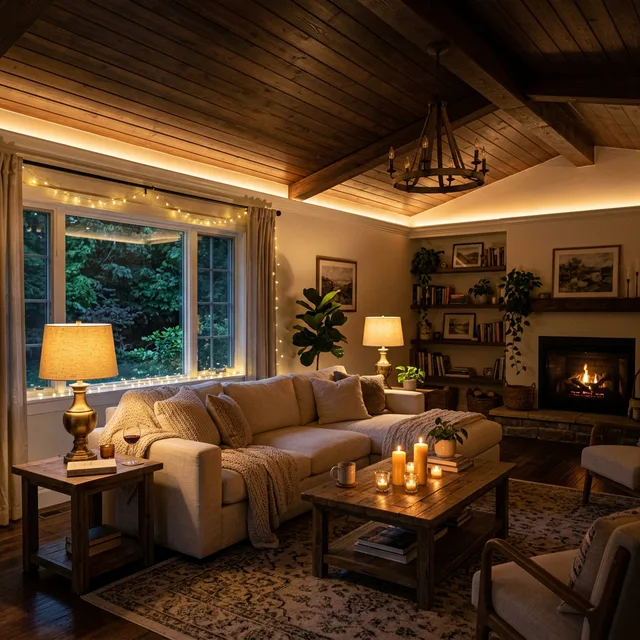
Professional lighting designers use this ratio: 60% ambient (general room light), 30% task (desk lamps, reading lights), 10% accent (candles, decorative lights). This creates the layered, dynamic lighting that chi thrives in.
The Three Layers of Lighting
Feng shui rooms should never rely on a single light source. Think of lighting in three layers:
Layer 1: Ambient (General) Lighting
This is the room's "base" light — ceiling fixtures, recessed lights, or central chandeliers. It provides the overall brightness level.
- Install dimmer switches everywhere you can — they let you shift the room's yin/yang balance throughout the day
- Avoid single exposed bulbs — they create harsh, uneven chi. Use fixtures that diffuse light
- Chandeliers with crystals are excellent for feng shui — they disperse light (and chi) in all directions
Layer 2: Task Lighting
Targeted light for specific activities — desk lamps, reading lights, under-cabinet kitchen lights.
- Desk lamps should be on the left side for right-handed people (and vice versa) to prevent shadows while writing
- Use warm white (2700K-3000K) for relaxation tasks, cool white (4000K-5000K) for focused work
- Kitchen counter lighting should be bright — food preparation is a wealth-generating activity that needs strong chi
Layer 3: Accent Lighting
Decorative lights that create mood and activate specific sectors.
- Upward-facing floor lamps in dark corners — lifts stagnant chi upward
- Candles in the South (Fame) and Southwest (Love) sectors
- String lights behind headboards for romantic bedroom energy
- Himalayan salt lamps — combine Fire (light) and Earth (salt crystal) elements. Perfect for the Northeast (Knowledge) sector
Room-by-Room Lighting Guide
| Room | Ideal Brightness | Color Temp | Key Tips |
|---|---|---|---|
| Living Room | Medium-bright | 2700K-3500K | 3 layers essential. Crystal chandelier ideal. Dimmer switch. |
| Bedroom | Soft-low | 2200K-2700K | No overhead ceiling light. Use bedside lamps + candles. Warm only. |
| Kitchen | Bright | 3500K-4500K | Under-cabinet lights. Bright over stove and sink. Clean, energetic light. |
| Home Office | Bright-focused | 4000K-5000K | Task lamp on desk. Avoid screen glare. Full-spectrum for alertness. |
| Bathroom | Medium-bright | 3000K-4000K | Good mirror lighting. No shadows on face for accurate self-care. |
| Entrance | Bright & welcoming | 2700K-3500K | Always on during evening. First impression = first chi impression. |
| Dining Room | Medium-warm | 2700K-3000K | Pendant over table. Candles for meals. Warm promotes appetite. |
| Hallway | Medium | 3000K | Never dark. Wall sconces at intervals slow fast-moving chi. |
Color Temperature: The Hidden Variable
Most people don't realize that light bulb color temperature (measured in Kelvin) dramatically affects chi quality:
- Warm White (2200K-2700K): Yin energy. Relaxing, calming, romantic. Best for bedrooms, dining rooms. Like sunset.
- Neutral White (3000K-3500K): Balanced yin-yang. Welcoming but alert. Best for living rooms, hallways, entries.
- Cool White (4000K-5000K): Yang energy. Energizing, focused, productive. Best for offices, kitchens, study rooms.
- Daylight (5500K+): Very yang. Stimulating but can cause fatigue with prolonged exposure. Best for short-task areas like laundry rooms or garages.
Using cool white (5000K+) bulbs in the bedroom. This creates strong yang energy exactly where you need yin energy for sleep. If you're wondering why you can't sleep well, check your bedroom bulb temperature first. Switch to 2700K or below.
Candles: Real vs. LED in Feng Shui
Candles represent the Fire element at its most primal. But does it matter if they're real or LED?
Real Candles:
- ✅ Generate actual Fire element energy (heat + light + movement)
- ✅ The flickering flame creates dynamic, living chi
- ✅ Scented candles add an additional layer (Earth element through aroma)
- ⚠️ Fire safety concerns — never leave unattended
- ⚠️ Paraffin candles release toxins — use soy or beeswax
LED Candles:
- ✅ Safe for bedrooms and around children
- ✅ Still provide light (Fire element, though weaker)
- ❌ No actual flame — missing the dynamic chi of real fire
- ❌ No heat — less Fire element activation
Verdict: Real candles are 3-4x more effective for feng shui purposes. Use them where safe, LED where not. Even one real candle in the room adds more Fire energy than ten LEDs.
Dark Corner Remedies
Every home has dark corners where chi stagnates. These are priority fix areas:
- Uplight floor lamp: Points light upward, lifting stagnant chi. The most effective single fix.
- Himalayan salt lamp: Warm, amber glow + Earth element + said to emit negative ions. Perfect for dark bedroom corners.
- Fairy string lights: Multiple small points of light distribute chi across the dark area. Great for awkward spaces behind furniture.
- Mirror + light: Place a mirror in the dark corner to reflect light from elsewhere in the room. Doubles the brightness without a new fixture.
- Reflective surfaces: Metallic vases, glass objects, or crystals catch and scatter available light into dark areas.
6 Common Lighting Mistakes
- Single overhead fixture for the entire room: Creates flat, shadowless light that makes a room feel institutional. Always add at least one more light source at a different height.
- Fluorescent lighting in living spaces: The constant, invisible flickering disturbs chi. Fine for garages; terrible for bedrooms and living rooms.
- Exposed bulbs: Bare, uncovered bulbs create harsh, scattered chi. Use lampshades or diffusers.
- Burned-out bulbs left unfixed: A dead light is dead Fire energy. Replace immediately — each unfixed bulb is a small energy drain.
- Spotlights aimed at people: Direct, overhead spots create "interrogation lighting" — sha chi that presses down on whoever sits below. Use indirect, bounced light instead.
- Uniformly bright throughout the home: Without variation in light levels, rooms lose their character and chi has no direction. Use brighter/dimmer zones purposefully.
Need a Lighting Assessment?
As part of my home consultation, I evaluate every room's lighting — color temperature, placement, brightness levels, and dark corner solutions tailored to your home's unique Bagua map.
Book Consultation