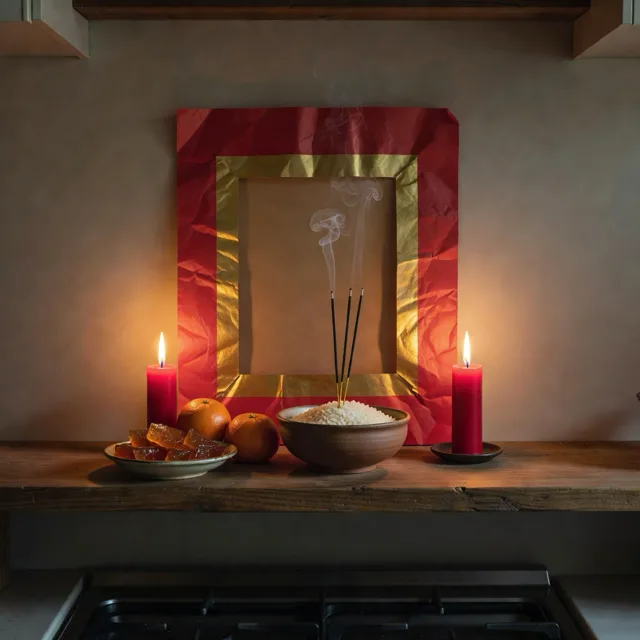
If Chinese New Year is the main event, 小年 (xiǎonián) — Little New Year — is the starting gun. This year it falls on Saturday, January 30, 2027 (腊月廿三 in the northern tradition). From this day forward, every action is pointed at one goal: welcoming the new year with a clean home, a clear conscience, and an offering of sweetness to the Kitchen God.
小年 is not a public holiday in the Western sense, but in Chinese households it transforms the final week before 春节 (chūnjié). The Kitchen God ascends to heaven tonight. The broom comes out tomorrow. And by the time you reach 除夕 (chúxī) on February 5, your home — physically and energetically — should be ready for a fresh start.
A note on dates: northern China traditionally observes 小年 on the 23rd of the 12th lunar month (January 30 this year), while many southern regions observe it on the 24th (January 31). Both are correct. Follow whichever tradition your family keeps — or simply use both days to get everything done.
Table of Contents
The Kitchen God (灶神) Custom
灶神 (zàoshén) — the Kitchen God, also called 灶王爷 (zào wáng yé) — is one of the most important household deities in Chinese folk religion. Classically, his image sits near or above the stove, where he observes the family's conduct throughout the year.
On 小年, the Kitchen God ascends to heaven to report on your household to the Jade Emperor. His report determines the fortune your family receives in the coming year. Naturally, families want to ensure a favorable review.
The Sweet Offering
The most charming custom of 小年 is smearing the Kitchen God's lips with something sweet — traditionally 麦芽糖 (màiyá táng), a sticky malt sugar candy, or 关东糖 (guāndōng táng). The reasoning is wonderfully practical:
- The sweet taste encourages the Kitchen God to say only sweet things about your family.
- The sticky texture seals his lips so he cannot report anything negative.
Some families also offer fruit, tea, and incense. After the offering, the old paper image of the Kitchen God is ceremonially burned — symbolizing his departure to heaven. A new image is placed on New Year's Day to welcome him back.
扫尘: The Year-End Sweep
扫尘 (sǎo chén) — sweeping away the dust — traditionally begins the day after 小年. The word 尘 (chén, dust) sounds like 陈 (chén, old/stale), so sweeping the dust symbolizes sweeping away the old year's stagnant energy to make room for fresh qi.
This is not ordinary cleaning. It is a ritual clearing of the entire home — top to bottom, inside to out. If you have already been following the 腊月 declutter plan, 小年 is the final push.
Sweeping Rules
- Sweep from inside to outside — symbolically pushing old energy out through the doors.
- Sweep corners and behind furniture — stagnant qi accumulates in neglected spaces.
- Wash windows and mirrors — clarity of vision for the new year.
- Fix anything broken — a dripping faucet, a stuck drawer, a burned-out lightbulb. Entering the new year with broken things carries the energy of incompleteness.
- Stop sweeping before 除夕 — all major cleaning should be finished by February 4 at the latest. On New Year's Day itself (February 6), do not sweep — you would sweep away the new year's incoming fortune.
Final Week Customs
The days between 小年 and 除夕 each carry their own traditional task. While modern families compress these into available weekend hours, knowing the traditional rhythm gives your preparation a sense of purpose.
| Traditional Day | Task | Purpose |
|---|---|---|
| 腊月廿三 (Jan 30) | 祭灶 — Offer to the Kitchen God | Ensure a good heavenly report |
| 腊月廿四 (Jan 31) | 扫尘 — Sweep and clean the house | Clear old energy, make room for new |
| 腊月廿五 (Feb 1) | 磨豆腐 — Make tofu / prepare foods | Begin cooking preparations |
| 腊月廿六 (Feb 2) | 割年肉 — Buy meat for the new year | Stock the pantry with festive ingredients |
| 腊月廿七 (Feb 3) | 宰鸡赶集 — Shop at the market | Final grocery run, buy decorations |
| 腊月廿八 (Feb 4) | 贴花花 — Put up decorations and couplets | 春联, 福 character, lanterns go up |
| 腊月廿九 (Feb 5) | 除夕 — Reunion dinner, 守岁 vigil | The year's most important family meal |
| 正月初一 (Feb 6) | 春节 — Chinese New Year | Year of the Fire Goat begins |
Personal Customs Worth Keeping
- Get a haircut before the new year. Traditionally, you should not cut hair during the first month of the new year (正月不剃头, zhēngyuè bù tì tóu) — the custom holds that cutting hair in the first month brings misfortune to your maternal uncle. Whether you follow that literally or not, getting a fresh cut before 除夕 is a clean-slate move that makes the new year feel intentional.
- Buy or wear new clothes. New garments for New Year's Day symbolize a fresh start. Red is the classic choice — it wards off the legendary beast 年 (nián) and channels Fire energy. But any bright, clean clothing works. Avoid all-black or all-white on New Year's Day, as these are traditionally associated with mourning.
- Settle debts. Entering the new year owing money carries that energy forward. In Chinese tradition, debts should be cleared before 除夕. Pay what you can before February 5 — even a partial payment signals intention. The energy of unresolved debts weighs on a household's qi.
- Prepare red envelopes. 红包 (hóngbāo) should be filled with crisp new bills in even amounts (avoid the number 4, which sounds like 死 sǐ, death). Common amounts are $20, $50, $88, or $168 — numbers ending in 8 are especially auspicious. Have them ready before the reunion dinner. Married adults give to unmarried younger family members and to elderly parents.
- Bathe on 除夕 afternoon. A full bath before the reunion dinner is a purification ritual — washing away the old year's dust, fatigue, and misfortune. Traditionally, add a few slices of pomelo peel (柚子皮) or mugwort (艾草 àicǎo) to the bathwater for extra cleansing. Some families bathe children first, then adults, ending with the household elders.
Red Envelope Etiquette
A few rules keep the red envelope exchange smooth and respectful:
- Always use new, crisp bills — wrinkled or old money is considered disrespectful.
- Give and receive with both hands.
- Children should not open red envelopes in front of the giver — it is more polite to wait.
- Traditionally, place red envelopes under your pillow on New Year's Eve — the money guards your sleep and brings fortune into your dreams.
- The red envelope itself matters: use quality red packets with gold lettering, not plain envelopes. The color red symbolizes good luck and the gold represents wealth.
Day-by-Day Checklist: Jan 30 to Feb 6
Here is a practical, modern version of the final-week countdown — designed for a Western household that wants to honor the traditions without taking a full week off work.
| Day | Morning | Evening |
|---|---|---|
| Sat Jan 30 | Clean the kitchen thoroughly (stove, oven, hood). This is your Kitchen God offering. | Set out sweets near the stove. Light a candle. Write down what you are grateful for this year. |
| Sun Jan 31 | Deep clean: vacuum, mop, wipe surfaces. Focus on corners and under furniture. | Declutter one final round — donate, discard, recycle. Repair anything broken. |
| Mon Feb 1 | Regular workday. Finalize your reunion dinner menu during lunch break. | Order specialty groceries online or plan your market trip for the weekend. |
| Tue Feb 2 | Regular workday. | Prepare red envelopes. Buy new bills from the bank if needed. |
| Wed Feb 3 | Regular workday. | Grocery shopping for reunion dinner ingredients. Buy fresh flowers. |
| Thu Feb 4 — 立春 | Feng shui year turns today. Apply 2027 flying star cures if you haven't yet. | Put up 春联 (couplets), hang lanterns, post the 福 character. Set out kumquats or blossoms. |
| Fri Feb 5 — 除夕 | Final prep: wrap dumplings, marinate fish, set the table. | Reunion dinner. Red envelopes. 守岁 — stay up to welcome the new year. |
| Sat Feb 6 — 春节 | 新年快乐! No sweeping, no trash removal. Wear new clothes. Visit elders. | Enjoy leftovers. Rest. The Year of the Fire Goat has arrived. |
Making It Work in a Western Household
You don't need a traditional altar or a paper Kitchen God image to participate in 小年. The customs translate into universal principles that any household can adopt:
- Clean your kitchen with intention. A sparkling stove is the Kitchen God offering, whether you frame it spiritually or practically.
- Clear what no longer serves you. 扫尘 is decluttering dressed in ritual. It works even if you call it "spring cleaning in January."
- Close out the year's loose ends. Debts, unfinished projects, unspoken apologies — resolve what you can.
- Prepare your home for guests. Even if you celebrate alone, treating your space as though honored guests are arriving shifts the energy.
- Space clearing. After the physical cleaning, walk through each room with sage, palo santo, or simply open the windows wide for 15 minutes. Let fresh air flush out stale qi from every corner.
Ready for the Goat Year?
小年 starts the countdown. A personalized consultation can help you identify which areas of your home need the most attention before the new year's energy arrives on February 4.
Book Your Pre-CNY Consultation