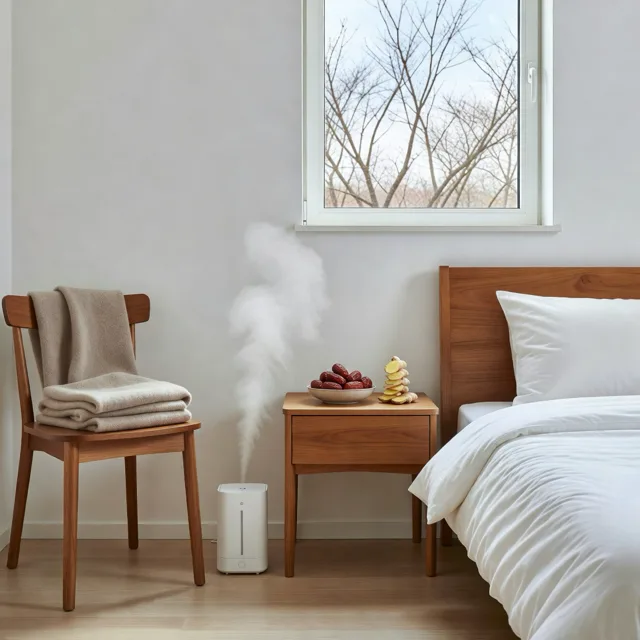
The trees haven't leafed out yet. Pollen counts are still low. And your nose is fine — for now. But if you're someone who dreads the itchy eyes and constant sneezing of April and May, late February is when your preparation window opens. In TCM, you don't wait for the enemy to arrive and then build the wall. You build it now, while conditions are still calm.
The concept at the center of this preparation is 卫气 (wèi qì) — defensive qi. Think of it as the energetic shield that circulates just beneath your skin and along your airways, deciding what gets in and what gets turned away. When Wei Qi is strong, external invaders — wind, pollen, cold, dryness — bounce off. When it's weak, every breeze carries something that makes you miserable.
This article is not a replacement for your allergy medication. If you have diagnosed allergies, keep your medical plan. What follows is the traditional Chinese approach to building resilience before the season hits — a 3-week preparation window from now through 惊蛰 (Awakening of Insects) on March 6.
Table of Contents
What Is Wei Qi?
In TCM, qi comes in many forms. 营气 (yíng qì, nutritive qi) flows inside the channels and blood vessels, nourishing organs from within. 卫气 (wèi qì, defensive qi) does the opposite — it flows outside the channels, at the surface of the body, guarding the skin, pores, and mucous membranes.
Wei Qi has three classical jobs:
- Warming the surface. That ability to stay warm when a cold wind hits? That's Wei Qi keeping your pores closed and your skin temperature stable.
- Opening and closing the pores. Sweating when you need to, sealing up when you don't. When Wei Qi is weak, you sweat easily and catch colds from every draft.
- Defending against external pathogens. In classical language, these include wind (风), cold (寒), heat (热), dampness (湿), and dryness (燥). In spring, wind is the dominant threat — and pollen rides the wind.
Wei Qi is produced by two organs working in tandem: the 肺 (fèi) — Lung system — distributes it to the surface, and the 脾 (pí) — Spleen system — generates the raw material from the food you eat. When either organ is weak, Wei Qi suffers. This is why TCM allergy preparation always starts with Lung and Spleen support.
The Lung-Spleen Partnership
The Lung system in TCM governs far more than breathing. It controls the skin, the nose, and the body's entire surface layer. It's the organ most directly involved in allergic reactions — sneezing, nasal congestion, and skin rashes are all Lung-surface events.
But the Lung can't do its job without raw material. That comes from the 脾 (pí) — the Spleen system — which transforms food into qi and sends it upward to the Lung for distribution. In TCM, this is called 脾为气血生化之源 — the Spleen is the source of qi and Blood production. When the Spleen is weak (from cold food, irregular meals, worry, or dampness), it can't manufacture enough Wei Qi for the Lung to deploy.
This is why people who are chronically tired, bloated, or prone to loose stools are often the same people who suffer worst from spring allergies. The connection is not coincidental — in TCM, it's the same root: Spleen deficiency leading to inadequate Wei Qi production, expressed through the Lung's defensive failure at the surface.
Foods That Build Wei Qi
The dietary approach has two tracks: strengthen the Spleen (so it can produce more Wei Qi) and support the Lung (so it can distribute that qi effectively). Both tracks favor warm, cooked, easy-to-digest foods — especially in February, when the body is still transitioning from winter.
| Food | TCM Action | How to Use |
|---|---|---|
| Chinese yam (山药 shānyào) | Strengthens Spleen and Lung qi. Neutral in temperature — suits everyone. | Add to congee, soups, or steam and eat as a side. One of the safest Spleen tonics. |
| Fresh ginger (生姜 shēngjiāng) | Warms the Spleen, opens the Lung, disperses surface cold. | 3 slices in morning tea or congee. Daily through February. |
| Jujube dates (红枣 hóngzǎo) | Boosts qi, nourishes Blood, supports the Spleen. | 3-5 pitted dates in congee or tea. Pairs well with ginger. |
| Millet (小米 xiǎomǐ) | Gentle Spleen tonic. Easy to digest, warm in nature. | Morning congee base. Even better than white rice for weak digestion. |
| Astragalus broth (黄芪 huángqí) | Classically the #1 Wei Qi tonic herb. Raises and consolidates defensive energy. | Simmer 3-5 slices in chicken or vegetable broth. Do not take during active cold or infection. |
| White fungus (银耳 yín'ěr) | Moistens the Lung without creating dampness. Supports yin. | Cook into sweet soup with pear and goji. Good for dry Lung constitutions. |
What to Avoid
Equally important is what not to eat during the preparation window. Foods that weaken the Spleen or generate dampness undermine everything you're building.
- Cold and raw foods: Smoothies, iced drinks, salads — these tax the Spleen's warming function. Keep everything cooked and warm through February.
- Excess dairy: In TCM, dairy is considered damp-producing. If you're prone to phlegm, nasal congestion, or postnasal drip, reduce dairy for the next three weeks and see if you notice a difference.
- Sugar and refined flour: Both generate dampness and weaken Spleen qi. The post-festival season is a good time to dial these back naturally.
- Late-night eating: Food consumed after 8 PM sits in a weakened digestive system (Spleen qi is lowest at night), producing dampness that accumulates by morning.
The Scarf Rule and Skin Barrier
Late February is deceptive. A warm afternoon makes you leave the house in a light jacket, and then the evening wind cuts through. In TCM, 风 (fēng) — wind — is the pathogen most associated with spring and with allergic reactions. Wind enters the body through the back of the neck, where key acupoints like 风池 (fēngchí, Wind Pool) and 风门 (fēngmén, Wind Gate) sit.
The scarf rule is simple: cover the back of your neck whenever you leave the house through March. Even on mild days. Wind that enters these points weakens Wei Qi at the surface and makes the Lung system vulnerable precisely when pollen counts are about to rise.
Additional surface protection
- Don't sweat and then stand in the wind. After exercise, change out of damp clothes and dry off before going outdoors. Open pores + cold wind = immediate Wei Qi breach.
- Morning face wash with warm water. Cold water on the face in February closes pores too aggressively. Warm water gently prepares the surface for the day.
- Nasal rinse habit. A gentle saline nasal rinse before bed clears particulates from the nasal passages. This is a physical hygiene step, not a TCM claim — but it complements the traditional approach well.
Bedroom Air and Dust
You spend roughly a third of your life in the bedroom. If that room is dusty, stuffy, or harboring allergens in bedding and curtains, no amount of ginger tea will compensate. February is the time to prepare your sleeping environment for the pollen season ahead.
| Action | Why It Matters |
|---|---|
| Wash all bedding in hot water | Removes dust mites and their waste, which are a major indoor allergen. Do this before pollen season compounds the load. |
| Vacuum mattress and pillows | Dust accumulates in mattress surfaces and pillow seams all winter. A thorough vacuum now reduces baseline irritation. |
| Check bedroom humidity | 40-50% relative humidity keeps airways comfortable. Below 30%, mucous membranes dry out and become more reactive. Above 60%, dust mites thrive. |
| Clean or replace HVAC filters | A dirty filter recirculates dust and dander all night. Change furnace and bedroom air purifier filters now, before they need to handle pollen. |
| Air the bedroom daily | Open a window for 10 minutes mid-morning (after dew has dried, before afternoon pollen peaks). Stale bedroom air stagnates qi and traps irritants. |
3-Week Plan to 惊蛰
惊蛰 (jīngzhé) — Awakening of Insects — arrives on Saturday, March 6, 2027. In TCM, this solar term marks the moment when dormant yang energy surges upward and outward. It's traditionally when allergies begin in earnest. Your window of preparation starts now.
| Week | Focus | Daily Actions |
|---|---|---|
| Week 1 (Feb 15-21) | Spleen reset | Warm breakfast every day (millet congee with dates and ginger). No cold drinks. Reduce dairy and sugar. Wash all bedding. Replace HVAC filters. Begin daily nasal rinse before bed. |
| Week 2 (Feb 22-28) | Lung support | Add astragalus broth twice this week. Include white fungus soup once. Continue warm breakfasts. Begin 10-minute morning airing of the bedroom. Wear a scarf daily — no exceptions. Vacuum mattress and pillows. |
| Week 3 (Mar 1-6) | Surface defense | Maintain all habits from weeks 1-2. Add a 20-minute daily walk in morning sunlight (yang qi activation). Check pollen forecast apps and start closing windows on high-count afternoons. Prepare any prescribed medications so they're ready for the first spike. |
Signs Your Wei Qi Needs Work
How do you know if your defensive qi is already compromised? In TCM, several patterns suggest weak Wei Qi. If you recognize three or more, the preparation window is especially important for you.
| Sign | What It Suggests |
|---|---|
| You catch every cold going around | Wei Qi is too weak to repel surface pathogens. The barrier is permeable. |
| You sweat easily with minimal exertion | Pores are not closing properly — Wei Qi's gating function is impaired. |
| Morning sneezing fits, even without allergies | Lung qi is failing to warm and protect the nasal passages overnight. |
| Fatigue that worsens in the afternoon | Spleen qi drops in the afternoon. If you crash daily at 2-3 PM, Spleen support is needed. |
| Pale complexion with a tendency to feel cold | Insufficient yang qi reaching the surface. Wei Qi, which is yang in nature, is depleted. |
| Skin that bruises easily or is slow to heal | Wei Qi protects the skin. When it's weak, the surface is fragile and slow to recover. |
If these patterns are familiar, consider a consultation with a TCM practitioner who can assess your body constitution and recommend targeted support. The habits in this article help everyone, but a personalized formula — especially one built around your specific weaknesses — makes a meaningful difference for chronic allergy sufferers.
What the research says
Nasal saline irrigation is a well-documented supportive measure for allergic rhinitis, widely recommended by both conventional and integrative practitioners. The TCM dietary and lifestyle measures described here are traditional approaches and should be understood as complementary to — not a replacement for — evidence-based allergy management.
⚠️ Disclaimer: The Wei Qi (defensive qi) concept is part of traditional Chinese medicine theory, not a biomedical mechanism. The dietary and lifestyle suggestions here are traditional wellness practices. If you have diagnosed allergies, asthma, or respiratory conditions, continue your prescribed treatment plan and consult your allergist or physician before making changes. Astragalus (黄芪) should not be taken during active infections or by individuals on immunosuppressive medications without medical guidance.
Build Your Personal Shield
Your Wei Qi strength is shaped by your birth chart's elemental balance. A BaZi consultation reveals your constitutional vulnerabilities and the specific support your Lung and Spleen systems need this spring.
Book Your Reading