农历: 丙午年 八月十五 (Fire Horse Year, 8th Lunar Month Day 15)
宜 (Auspicious): 祈福 (Pray) · 进补 (Take Tonics) · 求医 (Seek Medicine) · 纳采 (Harvest)
忌 (Avoid): 搬家 (Move) · 动土 (Break Ground) · 安葬 (Burial)
🔴 "宜进补" — Tonic day. Goji berries are TCM's most commonly used tonic food. Small red berries, massive cumulative benefits.
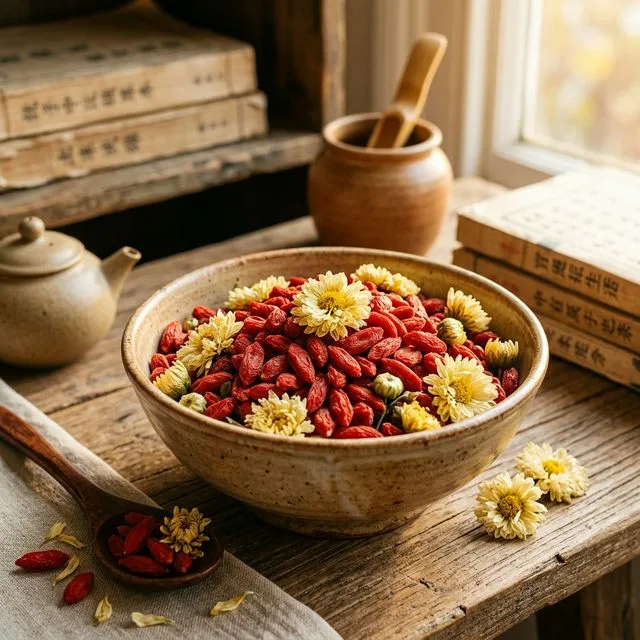
枸杞 (gǒuqǐ) — goji berries — might be the most used herb-food crossover in all of Chinese medicine. They appear in everything: teas, soups, congees, stir-fries, even hot pot. TCM considers them a Liver + Kidney tonic that brightens eyes, builds blood, and strengthens the body from the inside.
Table of Contents
TCM Benefits
| Benefit | TCM | Science |
|---|---|---|
| 👁️ Eye health | Liver stores blood → Liver opens to the eyes → nourish Liver = brighten vision. "明目" (brighten eyes) — goji's most famous benefit. | Highest food source of zeaxanthin + contains lutein. Both protect retina from blue light damage and may slow macular degeneration. |
| 🩸 Blood building | Red color = blood affinity. Nourishes Liver blood. Addresses fatigue, pale complexion, dizziness. | Contains iron (6.8mg/100g), polysaccharides, B vitamins. Supports erythropoiesis (red blood cell production). |
| 🔋 Kidney essence | Tonifies Kidney yin. Addresses lower back weakness, premature aging, reproductive vitality. Anti-aging foundation. | Rich in antioxidants (ORAC score among highest in fruits). Contains betaine, which supports liver function. |
| 🛡️ Immune support | Strengthens 卫气 (protective qi). Daily use builds gradual resistance. | Polysaccharides (LBP) shown in studies to modulate immune response. Contains vitamin C, selenium. |
6 Ways to Use Goji Berries
| # | Method | Recipe | Best For |
|---|---|---|---|
| 1 | 🍵 Chrysanthemum-goji tea | 5-8 goji berries + 3-5 chrysanthemum flowers in hot water. Steep 5 min. Refill 2-3 times. | THE classic autumn tea. Eye health + heat clearing. For computer workers, this should be daily. |
| 2 | 🥣 Congee topping | Add 10-15 berries to any congee in the last 5 min of cooking. Sweet, plump, beautiful. | Easiest daily incorporation. Adds color, nutrition, and mild sweetness to any congee variation. |
| 3 | 🍲 In soups | Add 15-20 berries to chicken soup, pork rib soup, or any braised dish in the last 10 min. | Nourishing comfort food. Goji adds subtle sweetness to savory soups. Beautiful red dots in golden broth. |
| 4 | ✋ Snack (dry) | Eat 15-20 dried berries as afternoon snack. Chew thoroughly. Slightly sweet, chewy. A handful at 3 PM. | No-effort method. Portable. Maximum direct nutrition absorption (no cooking loss). |
| 5 | 🥤 Smoothie booster | Blend 1 tbsp goji berries into fruit smoothie. Pairs with banana, mango, or berries. Add honey. | Modern twist. Good for kids who won't drink tea. Goji flavor blends easily into fruit smoothies. |
| 6 | 🍚 Rice steaming | Add 1 tbsp goji berries to rice cooker with your rice. Berries steam and plump up. Red-dotted rice! | Zero-effort daily use. Every bowl of rice becomes a tonic. Visually beautiful. Family-friendly. |
Quality & Dosage Guide
| Topic | Details |
|---|---|
| 📏 Daily dosage | 15-30 berries (6-12g) per day. This provides meaningful nutrition without excess. More is NOT better — excess can cause internal heat. |
| 🏆 Best quality | Ningxia (宁夏) goji berries are the gold standard. Larger, sweeter, deeper red. Look for "中宁枸杞" on packaging. |
| 👀 Quality check | Good: deep red, slightly wrinkled, sweet smell. Bad: bright red-orange (possibly dyed), clumpy, sour smell. Test: Ningxia goji floats in water initially. |
| 📦 Storage | Airtight container, cool dark place. Fridge extends life to 1+ year. Avoid moisture (causes mold). Freezer for long-term storage. |
Goji Berry Don'ts
| ❌ DON'T | Why Not |
|---|---|
| ❌ Eat when you have a cold/flu with fever | Goji berries are warming tonics. Adding warming energy during a fever = fueling the fire. Wait until fully recovered, then resume. |
| ❌ Take with green tea simultaneously | Green tea's tannins bind to goji's nutrients, reducing absorption. Space them 1 hour apart. Chrysanthemum tea is the compatible pairing. |
| ❌ Eat excessively (50+ berries/day) | Overconsumption generates internal heat: nosebleeds, red eyes, irritability. Ironic — too many "eye-brightening" berries = red eyes from excess heat. |
| ❌ Buy sulfur-fumigated berries | Some vendors fumigate goji with sulfur for brighter color and longer shelf life. These leave chemical residue. Buy organic or from trusted sources. |
⚠️ Disclaimer: Goji berries (Lycium barbarum) are a food with a long history of safe consumption. TCM claims about eye health are partially supported by modern research (zeaxanthin/lutein content), but goji berries are not a treatment for eye diseases. If you have diabetes, goji berries' natural sugar content should be factored into your diet plan. Goji berries may interact with blood-thinning medications (warfarin) — consult your doctor if taking anticoagulants. Nutritional values vary by source and drying method.
Dietary Constitution Analysis
Goji berries are warm-natured. Are they right for YOUR constitution? A BaZi-based dietary plan reveals your ideal herbs and foods for autumn wellness.
Book Consultation