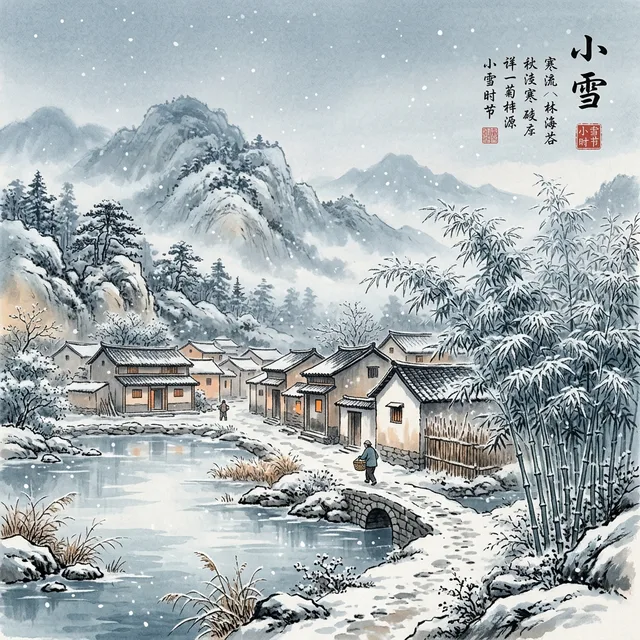
农历: 丙午年 十月十三
节气: 小雪 (Xiǎoxuě) — Light Snow, 20th of 24 Solar Terms
宜: 祈福 · 进补 · 安床 · 纳财
忌: 安葬 · 出行
❄️ "小雪三候:虹藏不见、天气上升、闭塞而成冬" — Rainbows disappear, heaven's qi rises, earth closes and winter is complete. This is the moment winter becomes REAL.
小雪 (xiǎoxuě) — Light Snow — is the 20th of the 24 solar terms, arriving roughly two weeks after 立冬 (Start of Winter). It marks when precipitation turns to snow in northern regions, though snow is still light and brief. More importantly, it signals that yin has reached critical mass — yang is now deeply hidden, and the darkest period of the year approaches. Where 立冬 was a gentle, symbolic opening to winter, 小雪 is where the season stops being theoretical.
Table of Contents
The Three Pentads of 小雪
Each solar term breaks down into three shorter windows, and knowing them turns "it's cold now" into something you can actually plan around.
Classical Chinese calendrics divide each of the 24 solar terms into three 5-day "pentads" (候), 72 across the year. 小雪's three pentads describe a steady closing-down of the year, quoted in the almanac above: 虹藏不见 (rainbows disappear — the sun angle and moisture are no longer right to produce them), 天气上升,地气下降 (heaven's qi rises, earth's qi sinks — yin and yang separate rather than mixing, the classical explanation for why the world starts to feel "closed off"), and 闭塞而成冬 (the world seals shut and winter is complete). Together they explain why 小雪 feels like a genuine threshold rather than just another cold day on the calendar.
小雪 Traditions
| Tradition | Details |
|---|---|
| 🥒 Pickle vegetables (腌菜) | "小雪腌菜,大雪腌肉" — Light Snow: pickle vegetables. Heavy Snow: salt meat. Historical preservation for winter survival. Modern: making kimchi, sauerkraut, pickled radish. |
| 🍊 Eat citrus (吃柑橘) | Citrus fruits ripen at 小雪. Vitamin C + warming citrus peel. Tangerines, oranges, kumquats — nature's winter vitamin delivery system. |
| 🔴 Make ciba (糍粑) | Southern China tradition: pounded glutinous rice cakes. Sticky = "sticky fortune" (粘运). Sweet, warming, community-made. Shared with neighbors. |
| 😊 Anti-depression awareness | "小雪忧郁" — Light Snow melancholy is real. Shortest daylight approaches. TCM recognizes seasonal emotional shifts and has specific protocols. |
立冬 → 小雪 → 大雪: What Changes
| Solar Term | Roughly | What's Different |
|---|---|---|
| 立冬 Lìdōng | ~Nov 7 | Winter officially begins, but days are still mild in most regions — more a psychological shift than a physical one. |
| 小雪 Xiǎoxuě (this guide) | ~Nov 22 | First light snow becomes possible in northern regions. Yin has solidified enough that the anti-depression protocol below becomes genuinely necessary, not just precautionary. |
| 大雪 Dàxuě | ~Dec 7 | Heavy snow and deep cold settle in properly. Tonic foods and warming therapies (moxibustion, foot soaks) move from "helpful" to "central" to the daily routine. |
小雪 Anti-Depression Protocol
| Strategy | Details |
|---|---|
| ☀️ Sunlight exposure | Get every minute of available daylight. Walk outside 10-20 min during peak sun (11 AM-1 PM). Sunlight regulates serotonin. Window seat at work if possible. |
| 🧡 Warm social contact | Counter isolation instinct. Call friends, visit family, join community events. Human warmth = emotional yang. Isolation amplifies winter blues. |
| 🍲 Mood-lifting foods | Dark chocolate (serotonin), bananas (tryptophan), walnuts (omega-3), saffron (clinically studied antidepressant). Add warming spices to everything. |
| 🏃 Gentle movement | Exercise releases endorphins. But winter exercise should be moderate: walking, tai chi, gentle yoga. NOT exhausting — protect yang. Move daily, sweat lightly. |
A Sample 小雪 Week
The four strategies above work best stacked into an actual weekly rhythm rather than attempted all at once. A realistic version:
| Day | Focus |
|---|---|
| Mon / Wed / Fri | 10-20 min midday outdoor walk, even if brief — non-negotiable on these three days. |
| Tue / Thu | One warm social contact — a call, a coffee, or dropping by someone's place after work. |
| Weekend | Cook one warming, mood-supportive dish from the food list — a soup with walnuts and dark chocolate for dessert covers two strategies in one sitting. |
| Every evening | 10-15 min of gentle movement — tai chi or a slow stretch sequence, never to the point of heavy sweating. |
Common 小雪 Mistakes
| Mistake | Why It Backfires |
|---|---|
| Skipping daylight entirely on work-from-home days | It's easy to go a full day without stepping outside once remote — exactly the pattern that worsens seasonal mood dips fastest. |
| Comfort-eating only sugar and refined carbs | Gives a short mood lift followed by a crash. The mood-lifting foods in the table above (dark chocolate, walnuts, bananas) offer steadier support. |
| Canceling social plans "because it's cold and dark now" | Isolation is the single biggest amplifier of winter low mood — push yourself to keep the plan even when the couch feels easier. |
| Over-exercising to "make up for" feeling sluggish | Contradicts winter's gentle-movement principle — hard workouts that leave you drenched in sweat drain yang rather than building it. |
| Assuming persistent low mood is "just winter" past 2 weeks | Mild seasonal dips are normal; two or more weeks of low mood, loss of interest, or sleep disruption warrants professional support, not just more tea and sunlight. |
Frequently Asked Questions
立冬 marks winter's official start but is often still mild; 小雪 is where the cold and darkness genuinely deepen and, in northern regions, the first light snow can appear. Practically, this is when preventive habits from early November need to become daily non-negotiables.
By this point daylight hours have dropped substantially compared to October, and the drop is cumulative — your body has had weeks of shrinking light rather than one sudden change. The anti-depression protocol above targets exactly this cumulative effect.
Both — the preservation traditions were originally about surviving winters with less fresh produce, and citrus genuinely does supply vitamin C during a season when fresh produce variety narrows. Treat them as sensible, low-effort seasonal habits rather than a cure for anything specific.
Not necessarily — the term describes a point in the traditional Chinese agricultural calendar (calibrated to northern China's climate), not a universal weather forecast. Treat the date as a seasonal marker for the practices in this guide rather than a literal snow prediction for your specific location.
If you only keep one thing: the midday outdoor walk. It's the cheapest, fastest, and most consistently supported habit here, and it anchors the rest of the sample week above.
⚠️ Disclaimer: 小雪 is a documented date in the Chinese agricultural calendar (around November 22). Seasonal Affective Disorder (SAD) is a clinically recognized condition — the relationship between reduced daylight and mood is well-established in psychiatric research. Light therapy, exercise, and social contact are evidence-based treatments for mild seasonal depression. If you experience persistent low mood, loss of interest, sleep changes, or suicidal thoughts, seek professional help immediately. TCM emotional management complements but does not replace mental health care.
Winter Emotional Support
Your Five Element constitution predicts which emotions challenge you most in winter and provides specific counter-strategies. Knowledge is your first line of defense.
Book Consult