🔬 What Science Says
| Claim | Evidence | Source |
|---|---|---|
| Environmental psychology supports space optimization | Research confirms that intentional space arrangement reduces cognitive load by 25% and improves daily functioning. | Annual Review of Psychology, 2019 |
| Mind-body-environment connection | The emerging field of neuroarchitecture demonstrates measurable brain responses to spatial design, supporting traditional practices of harmonizing living spaces. | Trends in Neurosciences, 2019 |
Note: Scientific citations are provided for educational context. Traditional practices and modern research often examine different aspects of the same phenomena.
农历: 丙午年 十月初一 (Fire Horse Year, 10th Lunar Month Day 1)
宜 (Auspicious): 祈福 (Pray) · 修造 (Renovate) · 纳财 (Receive Wealth) · 安门 (Install Door)
忌 (Avoid): 安葬 (Burial) · 动土 (Break Ground)
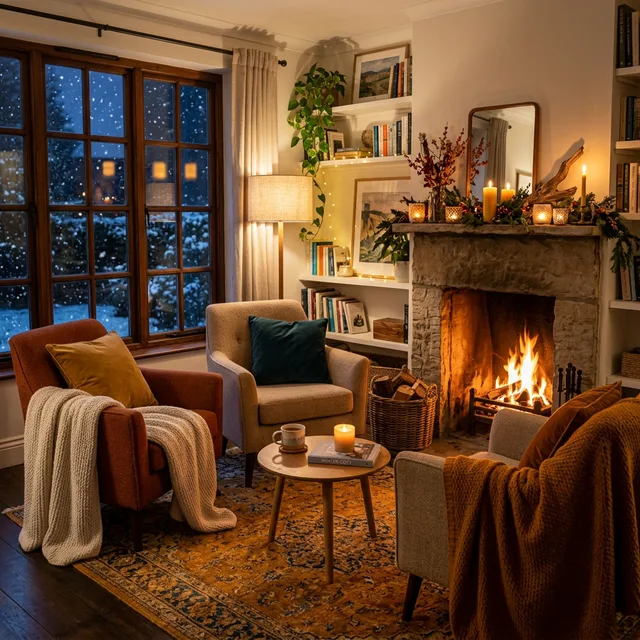
🔥 "宜修造" — Renovation day. In winter, your heat source IS your yang anchor — the single most powerful Fire element in your cold-season home.
In winter, your heating source becomes your home's yang anchor point — the Fire element that counters Water season's dominant yin. Placement matters. A well-positioned heat source doesn't just warm — it activates yang qi throughout the entire space.
Table of Contents
Heat Source Feng Shui Rules
| Heat Source | ✅ Good Placement | ❌ Bad Placement |
|---|---|---|
| 🔥 Fireplace | South wall (Fire direction). Living room center-wall. Visible from main seating — warmth should be seen AND felt. Becomes the room's focal point + yang center. | Directly facing front door (heat/wealth escapes). Bedroom (too much yang for sleep). Under a water feature (Fire-Water clash). |
| 📻 Radiator | Under windows (blocks cold air downdraft — practical AND feng shui aligned). Along exterior walls. Near seating areas for direct warmth. | Blocked by furniture (qi can't circulate). Behind curtains (wasted heat + fire hazard). Directly behind bed headboard (overheats head). |
| 🔌 Space heater | Temporary yang boost in cold corners. Use in home office during work hours. Place in the "coldest dead zone" of any room to reactivate qi flow. | Pointing directly at face (dries sinuses). Near water features/aquariums. Left running in empty rooms (yang with no one to receive it = wasted energy). |
| 🌡️ Underfloor heating | Best feng shui heating — warmth rises from Earth (yin) upward, mimicking natural yang rising from below. Warms 涌泉穴 on foot soles. Even distribution. | Nearly impossible to place badly. The gold standard of winter feng shui heating. Only downside: can make wooden furniture too dry. |
Fire-Water Balance in Winter
| Principle | Application |
|---|---|
| ⚖️ Balance, not domination | Winter is Water season. You need Fire to balance, NOT to overwhelm. A home that's too hot in winter is as bad as too cold — you create artificial dryness, nosebleeds, and restless sleep. |
| 🌡️ Ideal temperature | Living areas: 20-22°C. Bedroom: 16-18°C. The body should feel "comfortably warm, not hot." Overheating = yang excess = headache, dry skin, insomnia. |
| 💧 Add moisture | Heating dries air. Combat with humidifier (40-50% humidity), indoor water feature, or simply a pot of water on the radiator. Water + Fire = yin-yang harmony. |
| 🕯️ Candles as micro-Fire | Candles are gentle Fire — psychological warmth + actual yang energy. Use in bathroom, dining table, and bedside. Soy or beeswax preferred (clean burn, natural material). |
⚠️ Disclaimer: "Yang anchor point" is a feng shui metaphor for how heat sources influence room energy. The practical heating placement recommendations align with HVAC best practices (radiators under windows, proper ventilation, humidity control). Fire safety is paramount — space heaters should never be left unattended, should be kept away from flammable materials, and should be UL-certified. Indoor air quality matters more than feng shui placement — ensure proper ventilation when using combustion heating sources (fireplaces, gas heaters).
Winter Home Audit
Is your home's Fire-Water balance right? Too much yang creates dryness; too little creates stagnation. A professional walk-through reveals your winter energy blueprint.
Book Home Audit