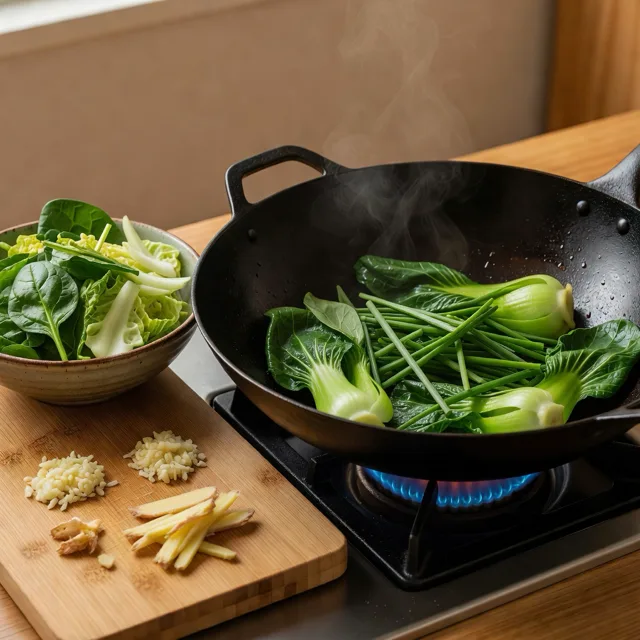
Every January, health articles push raw kale smoothies and cold-pressed juice cleanses. Traditional Chinese Medicine takes the opposite view. In the coldest month of the year, your 脾 (pí) — the Spleen system — is at its most vulnerable. Cold, raw food forces the Spleen to work harder to transform and transport nutrients, consuming precious yang qi that your body needs for warmth and immune defense.
The TCM rule for winter greens is simple: cook them. Stir-fry, blanch, add to soups, fold into congee. Every green vegetable you eat between now and 立春 (lìchūn, Start of Spring, February 4, 2027) should arrive at the table warm.
This does not mean avoiding vegetables. It means choosing the right ones, preparing them the right way, and pairing them with warming allies like ginger, garlic, and sesame oil. Here are the five best winter greens, ranked by their TCM thermal nature and how well they serve you in deep cold. For the full classification system, see the warming vs cooling foods guide.
Table of Contents
Why TCM Prefers Cooked Greens in Winter
In TCM, the Spleen is responsible for 运化 (yùnhuà) — transforming food into qi and blood. The Spleen prefers warmth. When you eat raw, cold food in winter, the Spleen must first warm it to body temperature before it can begin digestion. This costs yang qi. Over weeks of cold meals, the Spleen yang weakens, leading to what TCM describes as bloating, loose stools, fatigue, and a heavy feeling in the limbs.
Cooking pre-digests plant fiber, breaks down cell walls, and delivers nutrients in a form the Spleen can handle with minimal effort. The warmth itself is therapeutic — it moves qi, supports circulation, and keeps the digestive fire (脾阳 píyáng) alive through the coldest season.
What the research says
Cooking vegetables does reduce some heat-sensitive vitamins like vitamin C, but it significantly increases the bioavailability of other nutrients including beta-carotene and lycopene. The net nutritional impact of cooking versus raw preparation depends on the specific vegetable and cooking method.
The Five Winter Greens
| Green | TCM Nature | Organ Affinity | Winter Benefit |
|---|---|---|---|
| 韭菜 (jiǔcài) — Chinese Chives | Warm | Kidney, Liver, Stomach | The only warming green on this list. Directly supports Kidney yang — the organ system most active in winter. The go-to green for cold constitutions. |
| 菠菜 (bōcài) — Spinach | Cool (becomes neutral when cooked) | Liver, Stomach, Large Intestine | Nourishes Blood and moistens dryness. Cooking with ginger or sesame oil neutralizes its cool nature, making it suitable for winter. |
| 小白菜 (xiǎo báicài) — Bok Choy | Cool (becomes neutral-cool when cooked) | Lung, Stomach, Large Intestine | Mild and versatile. Supports Lung moistening in dry, heated homes. Best stir-fried with garlic to balance its cool nature. |
| 大白菜 (dà báicài) — Napa Cabbage | Neutral to slightly cool | Stomach, Large Intestine | The traditional winter storage vegetable in northern China. Mild, digestible, and excellent in soups, stews, and hot pot. |
| 芥菜 (jièchài) — Mustard Greens | Warm | Lung, Stomach | Warming and pungent. Helps resolve phlegm in the Lungs — useful for winter colds. Strong flavor that pairs well with ginger and soy. |
Quick Cooking Methods
Method 1: Garlic Stir-Fry (蒜炒青菜)
This is the universal Chinese method for any green vegetable and takes under five minutes.
- Heat a wok or large pan over high heat. Add 1 tablespoon of sesame oil or peanut oil.
- Toss in 3-4 cloves of sliced garlic and 2-3 slices of fresh ginger. Stir for 20 seconds until fragrant.
- Add your greens (washed, drained, cut into bite-sized pieces). Stir-fry 2-3 minutes until wilted but still bright green.
- Season with a pinch of salt and a splash of light soy sauce. Serve immediately.
Method 2: Quick Blanch (焯水)
For spinach and bok choy, blanching preserves color and texture while removing excess oxalates from spinach.
- Bring a pot of water to a rolling boil. Add a pinch of salt and a few drops of oil.
- Submerge greens for 30-60 seconds — just until wilted.
- Remove and drain. Dress with sesame oil, soy sauce, and a sprinkle of toasted sesame seeds.
Method 3: Soup and Congee Addition
Chop greens finely and add them to any winter soup, bone broth, or medicinal congee in the last 3-5 minutes of cooking. The greens absorb the warming broth and deliver nutrition without any separate preparation. This is the easiest method for busy mornings.
Warming Pairings
Even cool-natured greens become winter-appropriate when paired with warming ingredients. In TCM, this is the art of 调配 (tiáopèi) — balancing through combination. Your kitchen pharmacy already has most of these.
| Warming Ingredient | Best Paired With | Why |
|---|---|---|
| Ginger (生姜 shēngjiāng) | Spinach, bok choy | Warms the Stomach and neutralizes cool-natured greens. The classic balancing partner. |
| Garlic (大蒜 dàsuàn) | Any green | Warming and pungent. Supports Wei Qi (defensive energy). Kills the rawness in any stir-fry. |
| Sesame oil (麻油 máyóu) | Spinach, blanched greens | Warm-natured oil that moistens dryness. A drizzle transforms a simple blanched vegetable into a warming dish. |
| Dried chili flakes | Mustard greens, napa cabbage | Hot nature. A small amount boosts circulation and counteracts any cold qi from the vegetables. |
The Raw Salad Question
Can you eat raw salads in January? TCM would prefer you did not. The combination of cold, raw food and cold weather is a double burden on Spleen yang. If you genuinely enjoy salad and want to keep it in your diet, apply these modifications:
- Use room-temperature ingredients — take lettuce and vegetables out of the refrigerator at least 30 minutes before eating.
- Add warming dressing — ginger-sesame dressing or a vinaigrette with mustard and garlic.
- Eat salad at lunch, never dinner — your digestive fire is strongest at midday. Evening cold food is the worst combination in TCM terms.
- Follow with warm tea — a cup of ginger tea after a cold meal helps the Spleen recover.
That said, if you have a strong constitution and no digestive complaints, occasional raw salads will not cause harm. This guidance is most important for people with cold hands and feet, frequent bloating, loose stools, or fatigue — signs TCM associates with Spleen yang deficiency. For more on how to identify your constitution, see the gut health guide.
Quick Do's and Don'ts
| Do | Don't |
|---|---|
| Cook greens with warming aromatics — ginger, garlic, scallion, sesame oil | Eat greens raw and cold straight from the refrigerator, especially at dinner |
| Rotate between different greens throughout the week for variety and balanced nutrition | Eat the same green every day — even Chinese chives lose their appeal and nutritional diversity on repeat |
| Add greens to soups, congees, and stews in the last few minutes of cooking for an effortless nutrient boost | Overcook greens into a grey, limp mush — brief, high-heat cooking preserves color, texture, and nutrients |
| Choose Chinese chives and mustard greens when you need extra warmth on the coldest days | Rely on green smoothies or cold juices as your vegetable intake in January — the Spleen yang cost outweighs the nutrition |
Weekly Winter Greens Rotation
| Day | Green | Preparation |
|---|---|---|
| Monday | Chinese chives | Stir-fried with egg (韭菜炒蛋). Warming start to the week. |
| Tuesday | Spinach | Quick blanch, sesame oil and soy sauce dressing. |
| Wednesday | Bok choy | Garlic stir-fry with a pinch of dried chili. |
| Thursday | Napa cabbage | Added to bone broth soup with tofu and ginger. |
| Friday | Mustard greens | Stir-fried with ginger and soy. Pungent and warming. |
| Weekend | Mixed greens | Any combination, chopped into congee or hot pot. |
Storage & Freshness Guide
Winter greens are perishable. Buying a week's worth on Sunday and finding wilted leaves by Wednesday defeats the purpose. Here is how to store each green for maximum freshness and minimum waste.
| Green | Storage Method | Shelf Life | Prep Tip |
|---|---|---|---|
| Chinese chives | Wrap in slightly damp paper towel, store in a sealed bag in the crisper | 3-4 days | Do not wash until ready to cook — excess moisture accelerates decay |
| Spinach | Remove rubber band, line container with dry paper towel, store loosely | 5-7 days | Baby spinach wilts faster than mature — buy mature for longer storage |
| Bok choy | Stand upright in a container with a damp paper towel at the base | 4-5 days | Separate stalks from leaves when cooking — stalks need 1-2 minutes more |
| Napa cabbage | Wrap whole head in plastic wrap, refrigerate | 1-2 weeks | The most forgiving winter green for storage — peel outer leaves as needed |
| Mustard greens | Wrap in damp paper towel, sealed bag | 3-5 days | Blanch briefly before stir-frying to reduce bitterness if the flavor is too strong |
Batch Cooking Strategy
If weekday mornings are rushed, blanch a large batch of spinach and bok choy on Sunday evening. Store the blanched greens in an airtight container in the refrigerator. During the week, reheat a portion in the wok with garlic and sesame oil — a 2-minute side dish that requires no fresh prep. Blanched greens keep well for 3 days when stored properly.
⚠️ Disclaimer: TCM food therapy is a traditional practice, not a substitute for medical nutrition advice. The thermal nature classifications (warm, cool, neutral) represent traditional usage and are not clinical diagnoses. If you have specific dietary restrictions, food allergies, or medical conditions affecting digestion, consult your healthcare provider before making significant changes to your diet.
Your Winter Food Plan
Not sure which greens suit your constitution? A BaZi dietary analysis identifies whether you need more warming, cooling, or neutral foods this winter.
Book Diet Consultation