Chinese New Year (Saturday, February 6, 2027) is less than two weeks away, and the great reunion migration has begun. Whether you are driving four hours to your parents' house, flying across the Pacific, or hosting a week of guests who will test the limits of your kitchen and your patience, your body is about to be put through it.
Three things reliably go wrong during this stretch: travel makes you nauseous or exhausted, the feasts leave you bloated and sluggish, and crossing time zones scrambles your sleep. TCM has practical answers for all three — and none of them require a prescription or a pharmacy stop.
Pack smart. Press the right point. Sip the right tea. Arrive at the reunion table feeling like yourself.
Table of Contents
Motion Sickness: Ginger & PC6
Motion sickness — in TCM, a form of 胃气上逆 (wèi qì shàng nì), meaning Stomach qi rising the wrong way — is one of the most common travel complaints. The classic TCM approach uses two tools together: fresh ginger and the acupressure point 内关 (Nèiguān), also known as PC6.
Ginger (生姜 shēngjiāng)
Ginger is classified as warming in TCM and traditionally used to descend Stomach qi and settle nausea. For travel:
- Crystallized ginger candy: Chew 1-2 pieces 30 minutes before departure and as needed during the trip. Easy to carry, no prep needed.
- Fresh ginger slices: Place 2-3 thin slices in a thermos of hot water. Sip throughout the journey.
- Ginger tea bags: A practical backup when fresh ginger is not available.
内关 PC6 Acupressure
内关 (Nèiguān) — "Inner Pass" — is located on the inner forearm, three finger-widths above the wrist crease, between the two tendons. It is traditionally the most important point for nausea and motion sickness in TCM.
How to use it: Press firmly with your thumb on one wrist for 1-2 minutes, then switch to the other. Apply steady, moderate pressure — you should feel a dull ache, not sharp pain. Repeat every 15-30 minutes as needed during travel. You can also wear acupressure wristbands that apply constant pressure to this point.
Feast-Day Digestion
Reunion meals are generous by design. You will eat more than usual — that is the point. The goal is not to diet through Chinese New Year. The goal is to help your Spleen (脾 pí) and Stomach (胃 wèi) keep up with the workload so you enjoy the food rather than suffering afterward.
Hawthorn Berry (山楂 shānzhā)
山楂 (shānzhā) — hawthorn berry — is the classic TCM digestive aid for rich, heavy, meat-laden meals. It is traditionally used to dissolve food stagnation, especially from greasy or fatty foods. Carry dried hawthorn slices or hawthorn tea bags and brew a cup 30-60 minutes after large meals.
Other Digestive Teas
| Tea | Best For | When to Drink |
|---|---|---|
| Pu-erh (普洱) | Heavy, oily meals. Classically used to cut grease and support digestion. Warming. | During or after the main meal |
| Barley tea (大麦茶 dàmài chá) | Bloating and feeling overly full. Mildly cooling, supports Spleen transport. | Between meals or after lunch |
| Tangerine peel tea (陈皮茶 chénpí chá) | Gas, nausea, food stagnation. Classically moves qi and dries dampness. | After dinner, especially after sweets |
The 8-Point Rule
TCM dietary wisdom says 吃饭八分饱 (chīfàn bā fēn bǎo) — eat until you are eight-tenths full. At a reunion feast, this is hard. One practical trick: serve yourself a reasonable plate, eat it slowly, then wait 10 minutes before going back for seconds. Your Stomach needs time to signal fullness. If after the wait you still want more, go ahead — you have given your body a chance to advise you.
Jet Lag: The Organ Clock Strategy
If you are flying across time zones for the reunion, the TCM organ clock (子午流注 zǐwǔ liúzhù) offers a framework for resetting your body. The organ clock maps each two-hour window to a specific organ system. The strategy: anchor your new schedule to the most important organ windows rather than trying to force a full reset on day one.
| Priority | Window (Destination Time) | Action |
|---|---|---|
| 1. Stomach | 7-9 AM | Eat a warm breakfast at local 7-9 AM, even if you are not hungry. This resets your digestive rhythm. Congee or warm soup is ideal. |
| 2. Liver/Gallbladder | 11 PM – 3 AM | Be in bed and asleep during these hours at the destination time zone. This is the most critical reset window for deep rest and detoxification. |
| 3. Morning light | 6-8 AM | Get natural sunlight on your face within the first hour of waking. Light is the strongest signal for resetting your circadian rhythm. |
In-Flight Habits
Stay hydrated with warm water (not iced drinks — cold constricts the Stomach in TCM). Avoid alcohol in the air — it dehydrates and disrupts sleep quality. Move your ankles and calves every hour to prevent qi stagnation in the lower body. If the flight is overnight, set your watch to destination time immediately and eat and sleep according to the new clock.
Car Travel: The Long Drive
Road trips to reunion gatherings are common, especially if you are driving to parents or in-laws within a few states. The TCM concerns are different from flying: sitting still for hours stagnates qi in the lower body, and heating systems dry out the Lung.
- Stop every 90-120 minutes. Step out, swing your arms, do 10 squats or calf raises. Even 3 minutes of movement restores circulation and clears the heaviness that builds in the legs.
- Bring your thermos. Hot ginger tea or plain warm water from a thermos beats gas-station coffee. If you do stop for coffee, add a splash of hot water to cool it slightly and drink it warm rather than scalding — extreme heat damages Stomach lining in TCM.
- Snack smart. Nuts, dried goji berries, and tangerines (金桔 jīnjú — their scent is also considered auspicious) beat chips and candy. They are warming, nourishing, and do not generate dampness.
- Driver alert: If drowsiness hits, pressing 合谷 (Hégǔ / LI4) — the fleshy mound between thumb and index finger — firmly for 30 seconds is traditionally used to sharpen alertness. But if you are genuinely sleepy, pull over and nap. No acupoint replaces rest.
Arriving Exhausted: The First-Night Reset
When you arrive after a long journey, resist the urge to stay up late catching up. Your Kidney and Liver need recovery time. Take a warm foot soak (15 minutes, water just above ankle level, comfortable hot), drink a cup of warm milk or longan-goji tea, and get to bed within two hours of arrival. You will be a better guest tomorrow with a solid night of rest behind you.
The TCM Travel Packing List
| Item | Purpose |
|---|---|
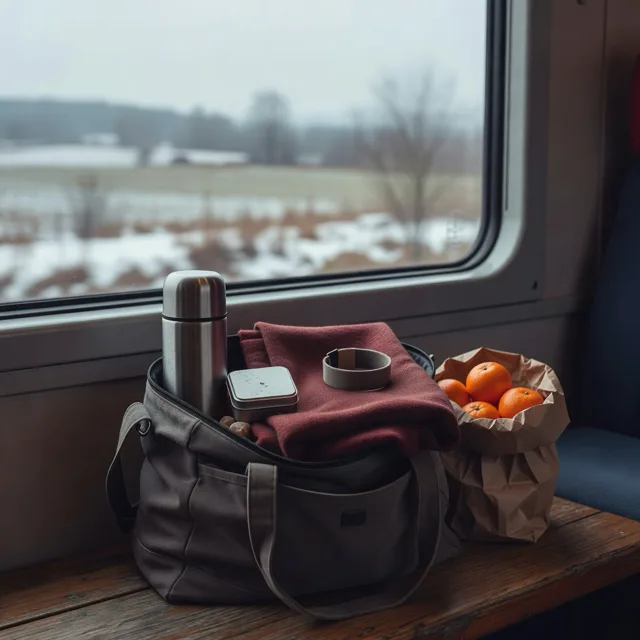
| Thermos / insulated bottle | For hot ginger tea, hawthorn tea, or plain warm water. The single most useful TCM travel tool. |
| Crystallized ginger candy | Motion sickness, cold mornings, post-meal bloating. Versatile, lightweight, shelf-stable. |
| Dried hawthorn slices or tea bags | Post-feast digestion support. Steep in hot water for 5 minutes after heavy meals. |
| Scarf and warm layers | Late January travel means cold airports, drafty stations, and wind. Protect the neck. |
| Acupressure wristbands (optional) | Hands-free PC6 pressure for long car rides or flights. |
Alcohol Moderation at Reunions
Reunion toasts are culturally important. Refusing every drink can create awkwardness. The TCM approach is not abstinence — it is moderation and mitigation.
Before drinking: Eat something oily or starchy first. A full stomach slows alcohol absorption. Congee, nuts, or a few dumplings before the toasting begins will make a real difference.
During: Alternate alcoholic drinks with warm water or tea. Take small sips rather than draining the glass. If pressed, you can hold a cup of tea and participate in toasts — most hosts care about the gesture, not the liquid.
After: Drink warm water with honey before bed. TCM classifies alcohol as warming and damp-generating. Honey (蜂蜜 fēngmì) is traditionally used to help the Liver process alcohol's aftermath. Avoid cold water and cold food after drinking — they compound the dampness. If you wake with a heavy head, a cup of tangerine peel tea (陈皮茶) or kudzu tea (葛根茶 gégēn chá) can help.
And if someone pushes hard, a graceful out: "I am saving my capacity for the reunion dinner toast." It works every time.
⚠️ Disclaimer: The travel health suggestions here are based on traditional Chinese wellness practices, not medical advice. Ginger and acupressure are traditional approaches to nausea and should not replace prescribed medications for motion sickness or other conditions. If you have a digestive disorder, are pregnant, or take blood thinners, consult your doctor before using hawthorn or ginger supplements. For persistent symptoms during travel, seek medical attention.
Travel Light, Arrive Strong
Your body constitution determines how you handle travel stress, cold, and rich food. A BaZi reading can pinpoint your vulnerabilities and tailor your travel prep to your personal element.
Book Your Reading