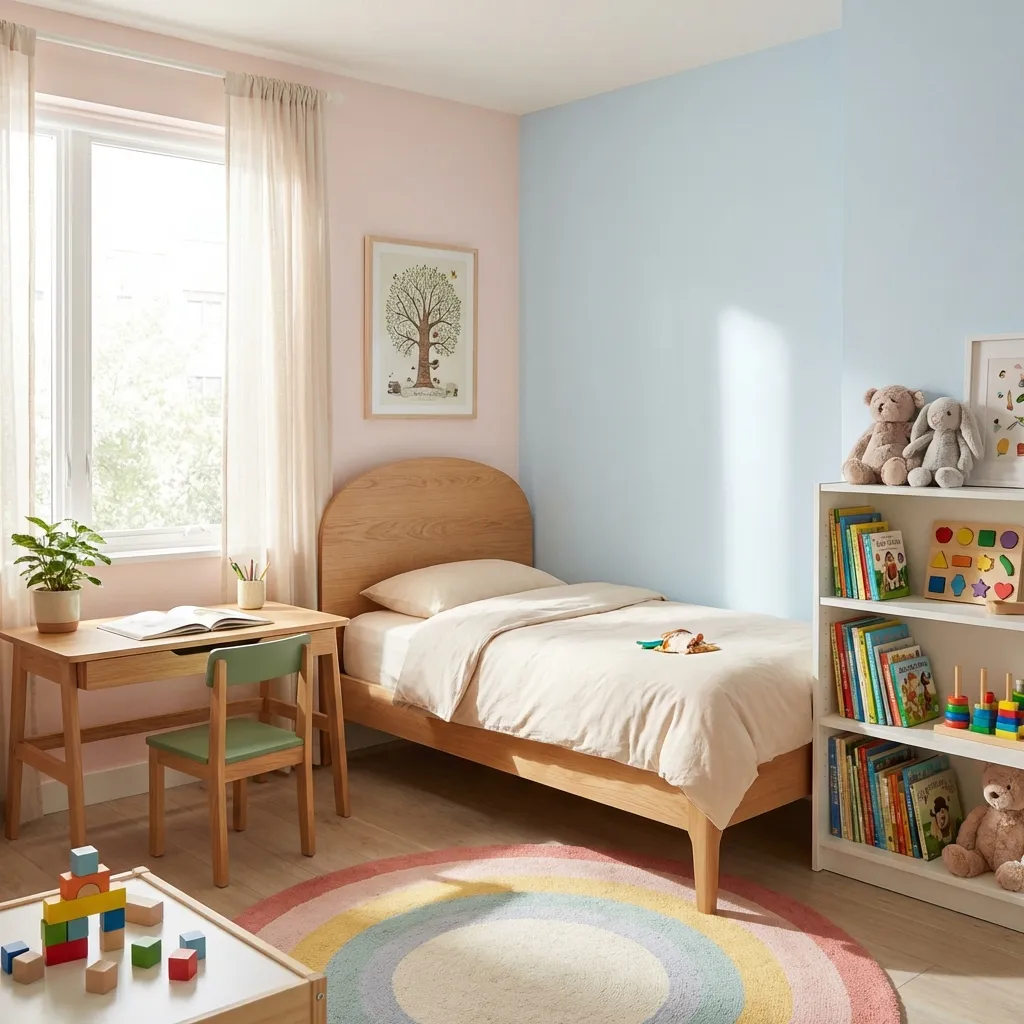
A child's room is their sanctuary for sleep, study, and imagination. In feng shui, this space directly influences their health, academic success, behavior, and emotional development. The right setup can support growth, improve focus, and create peaceful sleep — while poor feng shui can lead to restlessness, difficulty concentrating, and even health issues.
This guide covers authentic Eastern feng shui principles adapted for modern children's rooms, from infant nurseries to teenage spaces.
The Growth Principle
In Chinese feng shui, children represent the Wood element — constantly growing, stretching upward like bamboo. Their rooms should support this growth energy with Wood element colors (green, blue), natural materials, and upward-moving imagery.
Feng Shui by Age Group
Baby (0-2)
Focus on safety and calm. Soft yin colors. Crib away from windows. No mirrors facing crib.
Toddler (2-5)
Balance play and rest. Organized toy storage. Rounded furniture corners. Nature imagery.
School Age (6-12)
Add proper study area in NE. Clear separation between play and study zones. Achievement wall.
Teenager (13+)
Allow personal expression. Stronger yang energy OK. Good desk feng shui essential for exams.
Bed Placement for Children
Where your child sleeps dramatically affects their rest quality, health, and emotional stability:
The Command Position
- See the door — Child should be able to see who enters (sense of security)
- Not in line with door — Direct door alignment creates rushing chi
- Solid wall behind — Headboard against a solid wall provides support
- Head pointing East — East direction supports growth and new beginnings
Good Bed Placement
- Diagonal from door, can see entrance
- Solid headboard against wall
- Space on both sides of bed
- Away from windows and radiators
- Not under sloped ceiling or beams
Bad Bed Placement
- Directly in line with door
- Head under window
- Under exposed beams or slopes
- Facing bathroom door or stairs
- Sharing wall with bathroom/kitchen
Bunk Bed Concerns
Bunk beds are not ideal in feng shui. The upper child has no ceiling support (instability), while the lower child has pressure from above (stress). If you must use bunk beds, place a canopy or fabric above the lower bunk to create a symbolic "ceiling."
Study Desk Feng Shui
For school-age children, proper desk placement can significantly improve focus and academic performance:
The Knowledge Corner
The Northeast is the Knowledge sector in feng shui. This is the ideal location for:
- Study desk and homework area
- Bookshelf with educational materials
- Globe or world map (expanding knowledge)
- Awards and certificates (motivation)
Desk Positioning Rules
- Face a solid wall — Not a window! Windows cause distraction and scattered energy
- See the door from periphery — Child shouldn't sit with back completely to door
- Good lighting — Light from the left for right-handed, right for left-handed
- Clear desk surface — Clutter blocks mental clarity
- Earth element nearby — Crystals or ceramic items for stability and focus
Study Enhancement Cures
- Crystal globe — Place on desk for clarity of thought
- Pagoda tower — Traditional symbol of academic success
- Fresh plant — Small plant for growth energy (not cacti!)
- Blue items — Blue enhances concentration and calm focus
Colors for Children's Rooms
Children are sensitive to color energy. The right palette promotes healthy development:
Calming, focus
Growth, health
Cheerful, bright
Nurturing, kind
Creative, calm
Warm, friendly
Colors to Avoid or Minimize
- Bright red — Too stimulating; can cause aggression and poor sleep
- Orange as main color — Overly energizing; use as accent only
- Black — Too heavy for children; creates fear and sadness
- Pure white only — Too sterile; mix with warm accents
- Dark brown — Too heavy Earth element; can slow development
🧸 Organizing Toys & Clutter
Children's rooms tend to accumulate clutter. In feng shui, clutter blocks chi and creates scattered energy:
- Storage with lids — Closed containers keep energy calm at night
- Regular purging — Remove broken or outgrown toys (they hold stagnant energy)
- Under-bed clear — Nothing stored under the bed for best sleep
- Defined zones — Separate areas for sleep, study, and play
- Donate unused items — Teaches generosity and clears stuck energy
Children's Room Feng Shui Checklist
- Bed in command position, not facing door directly
- Solid headboard against wall
- Study desk in Northeast, facing wall not window
- Soft, muted colors (avoid bright red, black)
- No mirrors facing the bed
- No electronics near sleeping area
- Organized toys in closed storage
- Nothing stored under the bed
- Uplifting artwork (nature, animals, achievements)
- Good lighting — especially natural light
- At least one healthy plant (not cacti)
- Books accessible and organized
What to Remove from Children's Rooms
- Mirrors facing bed — Causes nightmares and restless sleep
- TV and screens in bedroom — Disrupts sleep and creates hyperactivity
- Violent images or toys — Affects subconscious and behavior
- Dried or artificial flowers — Dead energy not suitable for growth
- Heavy furniture above bed — Creates pressure and anxiety
- Too many stuffed animals on bed — Blocks child's energy; limit to 1-2 favorites
- Broken items — Broken toys, clocks, or furniture carry stagnant chi
Frequently Asked Questions
Need Help With Your Child's Room?
Book a consultation for personalized feng shui advice for your child's space.
Book a Consultation →Conclusion
Your child's room shapes their development in profound ways. By applying these feng shui principles, you create a supportive environment for restful sleep, focused study, creative play, and healthy growth.
Remember that children are sensitive to energy. Small changes — moving a desk, adding the right colors, or clearing clutter — can have significant positive effects on their wellbeing and success.
"Raising children is like planting seeds — the soil (environment) matters as much as the seed itself." — Ancient Wisdom