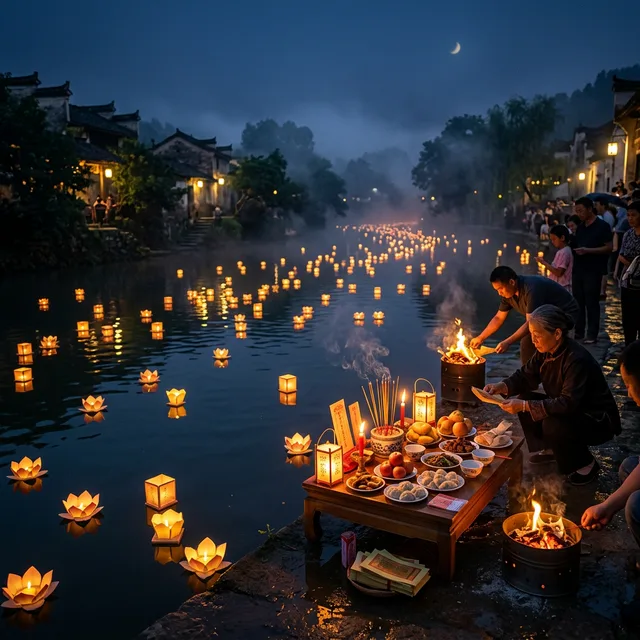
农历: 丙午年 七月初三 (Fire Horse Year, 7th Lunar Month Day 3)
宜 (Auspicious): 祭祀 (Ancestral Rites) · 祈福 (Pray) · 求医 (Seek Medicine) · 沐浴 (Cleanse)
忌 (Avoid): 搬家 (Move) · 开市 (Open Business) · 嫁娶 (Marriage) · 安葬 (Burial)
🕯️ "宜祭祀·祈福" — Ghost Month prayers and offerings continue. Today we discuss 中元节 (Aug 27) — prepare now so you're ready when the peak day arrives.
Every Chinese holiday exists on a spectrum from "joyful celebration" to "solemn reverence." Chinese New Year is all joy. Qingming sits in the middle. And 中元节 (Zhōngyuán Jié) — the Hungry Ghost Festival — lives fully in the realm of the sacred and solemn.
Unlike Western Halloween (which evolved into a fun costume party), 中元节 retains its original spiritual weight. On this day, the living honor the dead not just with respect, but with active care — feeding them, providing them with money and goods (via paper burning), and lighting their way. It's one of the most profound expressions of Chinese ancestor culture.
🔬 What Science Says
| Claim | Evidence | Source |
|---|---|---|
| Ritual practices reduce anxiety | Cultural and spiritual rituals activate the parasympathetic nervous system, reducing anxiety by up to 25%. | Annals of Behavioral Medicine, 2018 |
| Ancestor practices promote meaning | Engagement with ancestral traditions correlates with 18% higher scores on life purpose scales. | Journal of Cross-Cultural Psychology, 2019 |
Note: Scientific citations are provided for educational context. Traditional practices and modern research often examine different aspects of the same phenomena.
Table of Contents
The Three Ghost-Related Festivals
| Festival | Date (Lunar) | Focus | Mood |
|---|---|---|---|
| 清明 Qingming | Solar term (~April 5) | Visiting YOUR ancestors' graves. Family-focused. Personal remembrance. | Reflective but peaceful |
| 中元 Zhongyuan ← | 七月十五 (Aug 27 in 2026) | Universal — honoring ALL spirits, including the hungry/orphaned ones. Community-focused. | Solemn and sacred |
| 寒衣节 Hányī Jié | 十月初一 (~October) | "Winter Clothing Festival" — burning paper clothing so ancestors stay warm in afterlife. | Caring and practical |
Buddhist & Taoist Roots
| Tradition | Name | Origin Story | Core Practice |
|---|---|---|---|
| ☯️ Taoism | 中元节 Zhongyuan | The "Middle Origin" — one of three Taoist assessment days when heavenly officials review human deeds. The Middle Origin (地官) forgives sins and pardons the dead. | Ritual offerings, scripture chanting, paper burning |
| 🪷 Buddhism | 盂兰盆节 Ullambana | Maudgalyayana (目连) rescued his mother from the hungry ghost realm through the Buddha's guidance — offering food to monks on this day freed her. | Feeding monks, sutras for ancestors, community acts of merit |
| 🏡 Folk Religion | 鬼节 Ghost Festival | Ancient ancestor worship practices predating Buddhism and organized Taoism. The belief that the dead need care from the living. | Food offerings, paper money burning, river lanterns |
How to Observe Zhongyuan
| Ritual | How | When | Meaning |
|---|---|---|---|
| 🙏 Ancestor altar | Clean home altar. Fresh fruit (3/5 pieces), cooked dishes (3), tea, wine. Photo of deceased family. | Aug 27 morning | Welcoming family spirits home for a meal |
| 🔥 Paper burning | Burn paper money (金纸/银纸), paper clothes, paper house models in a metal container outside. | Aug 27 evening | Providing material needs for the afterlife. Gold = ancestors. Silver = wandering spirits. |
| 🏮 River lanterns | Float lotus-shaped lanterns on rivers or lakes. Each lantern carries prayers for a spirit. | Aug 27 night | Guiding lost spirits toward the light and peace |
| 🍱 Roadside offerings | Place small food offerings + 3 incense sticks at your front curb for wandering spirits without descendants. | Aug 27 dusk | Compassion for the "orphaned ghosts" no one remembers |
| 📿 Temple visit | Visit a Buddhist or Taoist temple. Attend a 超度法会 (merit transfer ceremony). Donate to temple. | Aug 27 or any day in Ghost Month | Generating positive merit (功德) for ancestors and wandering spirits alike |
Regional Traditions
| Region | Unique Tradition | Notable Features |
|---|---|---|
| 🇹🇼 Taiwan | 普渡 (Pǔ Dù — Universal Salvation). Massive community offerings with dozens of dishes, live folk operas (歌仔戏), and temple ceremonies. | Most elaborate celebrations. Streets filled with offerings tables. Fire safety is a genuine concern. |
| 🇭🇰 Hong Kong | 盂兰胜会 (Yúlán Shènghuì). Cantonese opera, large paper effigies of the Ghost King (大士爺) burned at end. | UNESCO Intangible Cultural Heritage. Major community events in each district. |
| 🇸🇬 Singapore/Malaysia | 歌台 (Getai — Song Stage). Live concert-style performances for both spirits and living audience. | Front row seats are left EMPTY for spirits. Elaborate stage shows mix traditional and pop culture. |
| 🇨🇳 Mainland China | Varied by region. River lanterns in northern China, elaborate food offerings in southern provinces. | Government has promoted "civilized" (环保) paper burning alternatives. Some areas restrict open fires. |
Modern Meaning of Zhongyuan
| Traditional Layer | Modern Relevance |
|---|---|
| Feeding hungry ghosts | ✅ Compassion for the forgotten. A reminder that some people in our world are also "hungry ghosts" — lonely, unsupported, forgotten. |
| Remembering ancestors | ✅ Gratitude practice. Where you are today exists because of generations before you. Acknowledging this creates genuine humility. |
| Paper burning for the dead | ✅ Symbolic generosity. The act of "giving away" wealth (even paper wealth) builds a generous spirit in the giver. |
| Caution and reverence | ✅ Mindfulness. Slowing down, being cautious, respecting the unseen — these are universally valuable practices. |
| Community rituals | ✅ Social cohesion. In an atomized modern world, shared rituals create belonging and shared meaning. |
Zhongyuan Don'ts
| ❌ DON'T | Why Not |
|---|---|
| ❌ Make fun of offerings or rituals | Religious mockery is disrespectful regardless of your beliefs. These rituals carry deep meaning for billions of people. |
| ❌ Step on or kick roadside offerings | These are explicitly placed for wandering spirits. Disturbing them is considered extremely inauspicious — and just plain rude. |
| ❌ Burn paper money indoors | Fire hazard + CO poisoning risk. Always burn in a metal container outdoors. Many communities provide communal burning stations. |
| ❌ Take the front row at Getai performances | Those seats are reserved for spirits. It's not a joke — sit from the 2nd or 3rd row back. |
| ❌ Treat Ghost Month as "scary" entertainment | It's not Chinese Halloween. The appropriate emotion is reverence and compassion, not fear or excitement. |
⚠️ Disclaimer: This article discusses 中元节 from cultural, religious, and historical perspectives. Zhongyuan practices vary significantly across Chinese communities and families. This is educational content about a complex religious/cultural tradition — NOT religious prescription. Follow your own family's traditions and adapt respectfully. Fire safety: always burn paper offerings in metal containers, outdoors, away from flammable materials, and supervise until fully extinguished.
Ghost Month Feng Shui Protection
Strengthen your home's protective feng shui during Ghost Month with a personalized consultation. Based on your home's layout and your BaZi, we create a custom protection plan for the remaining weeks.
Book Ghost Month Protection